






In the church at Pergamos, we learn about the dangers faced by a worldly church.
Introduction
Not every church that looks alive is healthy.
In Revelation 2, Jesus writes to a church that had faithfulness in some areas—but compromise in others. The church at Pergamos was not denying Christ outright… but it was slowly becoming married to the world.
That is exactly what Pergamos means: “married.”
This is the danger of the worldly church—not open rebellion, but quiet compromise.
The Character of the City
Pergamos was one of the most influential cities in the ancient world.
1. Political Power
- It was the capital of the Roman province of Asia Minor
- Government authority and imperial loyalty dominated the culture
2. Cultural Influence
- Home to a library of over 200,000 volumes
- A center of education, philosophy, and intellectual pride
3. Religious Confusion
Pergamos was saturated with false worship:
- Temples to Dionysius (Bacchus), Athena, Demeter, and Zeus
- Three temples dedicated to Caesar worship
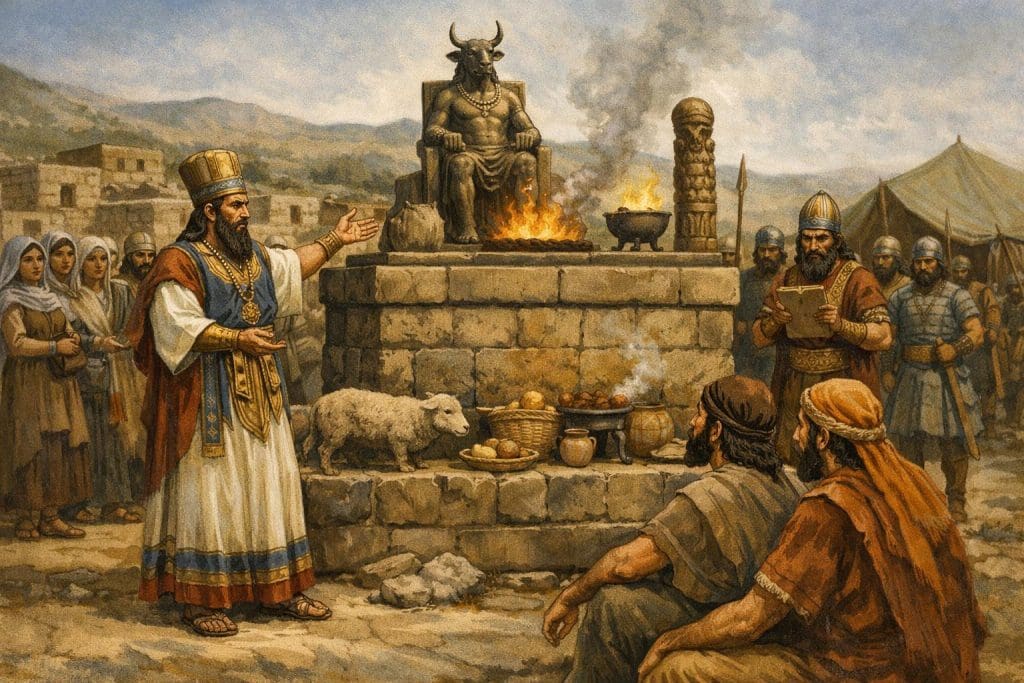
The altar of Zeus was so prominent that many believe this is what Jesus referred to as “Satan’s seat” (Revelation 2:13).
4. Medical Deception
- The city hosted a medical school devoted to Asclepius, the so-called healer
- His symbol? A serpent—a counterfeit of true healing
Pergamos was a city where:
- Politics corrupted truth
- Religion distorted salvation
- Culture celebrated compromise
And right in the middle of it there was a church.
What Is the Worldly Church in the Bible?
A worldly church is not one that rejects Jesus outright.
It is a church that:
- Lives in the world without resisting it
- Adopts the culture instead of confronting it
- Blends truth with error
Pergamos did not abandon Christ; they accommodated the world.
The Christ of the Church
Jesus introduces Himself as “the One with the sharp two-edged sword.”
This is the Word of God (Hebrews 4:12).
The Word does not blend truth and error—it divides:
- Truth from falsehood
- Wheat from tares
- Faith from compromise
Christ comes to this church not with comfort, but with discernment and judgment.
The Comprehension of Christ
Jesus says, “I know…”
1. He Knows Their Works
Even when there is little to commend, Christ sees everything clearly.
2. He Knows Where They Live
They dwell where “Satan’s seat” is—a system marked by:
- Political corruption
- Spiritual deception
- Cultural pressure
False saviors surrounded them:
- Zeus Soter — “Zeus is Savior” (a false god)
- Asclepius Soter — “A man who saves”
- Self Soter — “I save myself”
Sound familiar?
The world still preaches:
- Government will save you
- Medicine will save you
- You can save yourself
But Jesus alone saves.
3. He Knows What They Hold Fast
- “My name is Jesus”
- “My faith is in Jesus”
Even in compromise, there were still those holding on.
4. He Knows the Faithful
Jesus mentions Antipas, a faithful martyr.
No biography. No recognition. But heaven knew his name.
God always has a remnant.
The Caution of Christ
“I have a few things against you…”
This is where the danger becomes clear.
1. The Doctrine of Balaam
Balaam could not curse Israel—so he corrupted them instead.
He taught compromise:
- Eat meat offered to idols → idolatry
- Engage in sexual immorality → cultural conformity
The message was simple: “You don’t have to resist the culture—join it.”
That same spirit was in Pergamos.
2. The Doctrine of the Nicolaitans
- “Niko” = conquer
- “Laos” = people
This doctrine:
- Divided the church into clergy and laity
- Created spiritual hierarchy and control
Instead of Servant leadership, it produced Spiritual domination.
3. Toleration of Sin
Pergamos had become like Corinth:
- Tolerating false teaching
- Accepting immorality
- Allowing compromise to remain
Here is the key issue:
They did not practice the sin—they tolerated it.
And that was enough for Christ to rebuke them.
The Challenge of Christ
1. Repent… or Else
Judgment begins with God’s people (1 Peter 4:17).
Jesus warns:
- Repent of compromise
- Or face divine correction
A worldly church cannot escape accountability.
2. The Promise to Overcomers
To those who refuse compromise, Jesus promises:
Hidden Manna
- The true Bread from heaven
- Christ Himself as eternal sustenance
A White Stone
- A symbol of acquittal in ancient courts
- Declared not guilty before God
A New Name
- A new identity
- A new nature
- Reserved in heaven
The Worldly Church and the Gospel
The gospel does not call us to blend in.
It calls us to:
Jesus did not die to make us comfortable in the world—He died to deliver us from it.
Conclusion
Pergamos is a warning to every church:
You can:
- Hold the name of Jesus
- Claim faith in Jesus
…and still slowly become married to the world.
The question is not: “Do you belong to a church?”
The question is: “Does your church belong to Christ—or to the world?”
Engagement Questions (comment below)
- Where do you see the church today compromising with culture?
- Is tolerating sin just as dangerous as committing it? Why?
- What does it mean practically to “repent” as a church?
- How can believers live in the world without becoming like it?
Enjoy simple, Bible-centered teaching? Receive a short Daily Devotion by email and spend a few minutes each day in God’s Word. For more information, CLICK HERE.
Continue studying Revelation: Explore our complete chapter-by-chapter guide to the Book of Revelation, including the seven churches, seals, trumpets, Antichrist, Millennium, final judgment, and New Jerusalem–OR go:
<<Back to Church of Smyrna OR Forward to Church of Thyatira>>
<<Back to Bible Passages
For more insights to the Book of Revelation, order Pastor Alan’s book from the links below.
Dr. Alan Holden has served in pastoral ministry for more than 35 years, preaching and teaching the Bible in churches across the United States. He holds a Doctor of Ministry from Luther Rice Seminary and a Master of Divinity from The Southern Baptist Theological Seminary. Through What’s It Mean?, he seeks to help readers understand the meaning of Scripture and grow in their walk with Christ. He is currently the pastor of Lake Saunders Baptist Church in Tavares, FL.