
What Does Revelation 20 Mean?

What Does Revelation 20 Mean?

Question

In Revelation 20:1–5, we read that Satan is bound for a thousand years and then released for a short time. What is the theological purpose behind his temporary release? Does this brief freedom serve a deeper divine plan or final test within God’s redemptive narrative? Furthermore, the passage states that those seated on thrones will judge during the thousand years. Whom are they judging, especially considering that the rest of the dead are said not to come to life until after the thousand years? How should we understand the identity of both the judges and those being judged within this eschatological framework?

Answer

Revelation 20:1–5 addresses events that occur after Christ’s visible return and describes the binding of Satan, the millennial reign, and a later release. While Christians differ on the exact structure of end-time chronology, several theological themes are widely recognized.

1. The Purpose of Satan’s Temporary Release

The text states that Satan is bound so that he “should deceive the nations no more” for a thousand years, and afterward “must be loosed a little season” (Rev. 20:3). Scripture does not give a single explicit sentence explaining why he is released, but several theological purposes can be inferred:

A. The Final Exposure of Rebellion
Even after a long era of peace and righteous rule, Satan’s release reveals that rebellion is not merely environmental—it is rooted in the human heart apart from grace. His brief freedom demonstrates that evil, when given opportunity, still seeks opposition to God. This underscores the justice of God’s final judgment.

B. A Demonstration of God’s Complete Victory
God does not merely restrain evil; He ultimately defeats it openly and conclusively. The release allows evil to gather once more only to be permanently destroyed, showing that God’s victory is not fragile or temporary.

C. The Vindication of Divine Justice
The final uprising makes it unmistakably clear that God’s judgment is righteous. No one can claim that evil was suppressed unfairly or that sinners were denied opportunity. The last rebellion confirms that judgment is deserved, not arbitrary.

In short, Satan’s release does not threaten God’s sovereignty—it magnifies it. Evil is permitted one final moment only to be decisively ended.


2. The Identity of the Judges on the Thrones

Revelation 20:4 says, “I saw thrones, and they sat upon them, and judgment was given unto them.” Scripture elsewhere helps us understand who these may be:

A. Believers Reigning with Christ
Multiple New Testament passages teach that faithful believers will share in Christ’s reign:

  • “Do ye not know that the saints shall judge the world?” (1 Cor. 6:2)

  • “If we suffer, we shall also reign with Him” (2 Tim. 2:12)

  • Revelation 3:21 promises overcomers a place on Christ’s throne.

These texts strongly suggest that the judges are redeemed believers, especially those who remained faithful under persecution.

B. Martyrs Highlighted
Revelation 20:4 specifically mentions those who were beheaded for their testimony. This does not necessarily exclude other believers but emphasizes that those who suffered most visibly for Christ are publicly honored in His kingdom.


3. Whom Are They Judging?

The passage does not describe a courtroom scene with named defendants, so we interpret by broader biblical context.

A. Participation in Christ’s Government
Judging here likely includes administration, authority, and governance, not only legal sentencing. In biblical language, “judging” often means ruling or exercising leadership under God’s authority (as in the Book of Judges).

B. The Nations or the Unbelieving World
1 Corinthians 6:2–3 suggests believers will participate in judgment over the world—and even angels—indicating a role in the broader divine order rather than judging fellow believers for salvation.

C. Not the Final Great White Throne Judgment
The final judgment of the dead appears later in Revelation 20:11–15. The judging in verses 4–6 is therefore distinct from that ultimate sentencing. It is more closely tied to Christ’s millennial reign than to eternal condemnation.


4. The “Rest of the Dead”

Revelation 20:5 says, “the rest of the dead lived not again until the thousand years were finished.” This distinguishes two groups:

  • The righteous, who share in the “first resurrection” and reign with Christ.

  • The rest of the dead, who face resurrection and judgment afterward.

This separation emphasizes the blessedness of those united to Christ and the seriousness of final accountability for those who rejected Him.


Summary

  • Satan’s release serves to expose rebellion, vindicate God’s justice, and demonstrate His final victory over evil.

  • The judges are most naturally understood as redeemed believers—especially faithful martyrs—reigning with Christ.

  • Those judged are not fellow Christians for salvation, but represent participation in Christ’s righteous rule over the world, distinct from the later Great White Throne judgment.

  • The passage ultimately highlights God’s sovereignty, justice, and the honor given to those who belong to Christ.

Revelation 20 is not meant to satisfy every chronological curiosity as much as it is meant to assure believers: evil will end, Christ will reign, and faithfulness to Him is never in vain.


Dr. Alan Holden has served in pastoral ministry for more than 35 years, preaching and teaching the Bible in churches across the United States. He holds a Doctor of Ministry from Luther Rice Seminary and a Master of Divinity from The Southern Baptist Theological Seminary. Through What’s It Mean?, he seeks to help readers understand the meaning of Scripture and grow in their walk with Christ. He is currently the pastor of Lake Saunders Baptist Church in Tavares, FL.


If this article helped you, you may enjoy the Free 7-Day Eternal Life Devotional.


Download the Free 7-Day Devotional


What Is the Biblical Purpose of Fasting?

Biblical purpose of fasting
Biblical fasting is a voluntary, temporary setting aside of normal routines in order to seek God with greater focus.

What Is the Biblical Purpose of Fasting?

New Christians often wonder what is the biblical purpose of fasting. Because they are eager to honor Scripture, they want to understand whether fasting is required and what purpose it serves. At the same time, fasting can feel foreign to modern American life—and for some people with medical conditions such as diabetes, it may even be unsafe. A careful look at Scripture brings both clarity and balance to this subject.

What Fasting Is — and What It Isn’t

To understand fasting, we must place ourselves in the world of the Bible. In biblical times, gathering and preparing food demanded significant time and labor. There were no supermarkets or fast-food restaurants. Because food required so much daily attention, fasting often meant abstaining from meals and intentionally setting that time aside for spiritual pursuits such as prayer, repentance, and meditation on God’s Word.

At its heart, fasting is not merely the absence of food, but the intentional redirection of time and focus toward God for a defined period.

What Is Fasting?

Biblically, fasting most often involved food, but the principle can extend beyond meals. Fasting is voluntarily abstaining from something that occupies a large portion of one’s attention in order to devote that time to prayer and Scripture. The emphasis is not the item surrendered, but the heart turned toward God.

The apostle Paul gives a related principle in marriage, advising couples not to abstain from marital relations except by mutual agreement and only for a limited time devoted to prayer (1 Corinthians 7:3–5). The pattern is intentional, temporary, and spiritually focused.

What Fasting Is Not

Fasting is not a badge of spiritual superiority. Abstinence without prayer, humility, and meditation on Scripture is simply dieting or self-denial—not biblical fasting. True fasting is relational; it is time set apart to seek God, not to impress others or earn merit.

Biblical Reasons for Fasting

In Scripture, fasting appears in several key contexts:

1. To Seek God’s Guidance

Fasting created space for extended prayer and reflection on God’s Word. By setting aside normal routines, believers could focus more fully on seeking the Lord’s wisdom and direction.

2. To Devote Oneself Fully to God’s Work

Fasting sometimes accompanied moments of concentrated ministry. A helpful illustration appears in John 4. Jesus, weary and hungry, sent His disciples for food while He rested at a well. During that time He ministered to a Samaritan woman. When the disciples returned and urged Him to eat, He replied, “My food is to do the will of Him who sent Me” (John 4:34). The work of God took priority over physical nourishment.

3. To Prepare for Spiritual Conflict

Fasting also served as spiritual preparation. Before entering difficult spiritual seasons, believers humbled themselves, confessed sin, and immersed themselves in prayer and Scripture, expressing dependence on God rather than self-strength.

Is Fasting for the Forgiveness of Sins?

No. Scripture never presents fasting as a means of earning forgiveness. The only fast explicitly commanded by God was connected to Yom Kippur, the Day of Atonement (Leviticus 16:29; 23:27), and that command was given specifically to Israel under the Mosaic Law.

Israel awaited atonement with solemn expectation. The church, however, lives in the reality of redemption already accomplished in Christ. Christians do not fast to obtain forgiveness, but to deepen dependence on God and align their hearts with His will.

Is Fasting Commanded for Christians Today?

While fasting can be spiritually beneficial, the New Testament does not command it as a universal requirement. It is a voluntary discipline, not a test of faithfulness. Wisdom, health considerations, and personal conviction should guide its practice.

Summary Takeaway

The purpose of Biblical fasting is not about earning favor with God, proving spirituality, or securing forgiveness. It is a voluntary, temporary setting aside of normal routines in order to seek God with greater focus. For believers in Christ, fasting is a tool for spiritual clarity, humility, and devotion—not a requirement for salvation or a measure of holiness.


Dr. Alan Holden has served in pastoral ministry for more than 35 years, preaching and teaching the Bible in churches across the United States. He holds a Doctor of Ministry from Luther Rice Seminary and a Master of Divinity from The Southern Baptist Theological Seminary. Through What’s It Mean?, he seeks to help readers understand the meaning of Scripture and grow in their walk with Christ. He is currently the pastor of Lake Saunders Baptist Church in Tavares, FL.


If this article helped you, you may enjoy the Free 7-Day Eternal Life Devotional.

Download the Free 7-Day Devotional

BACK TO QUESTIONS & ANSWERS

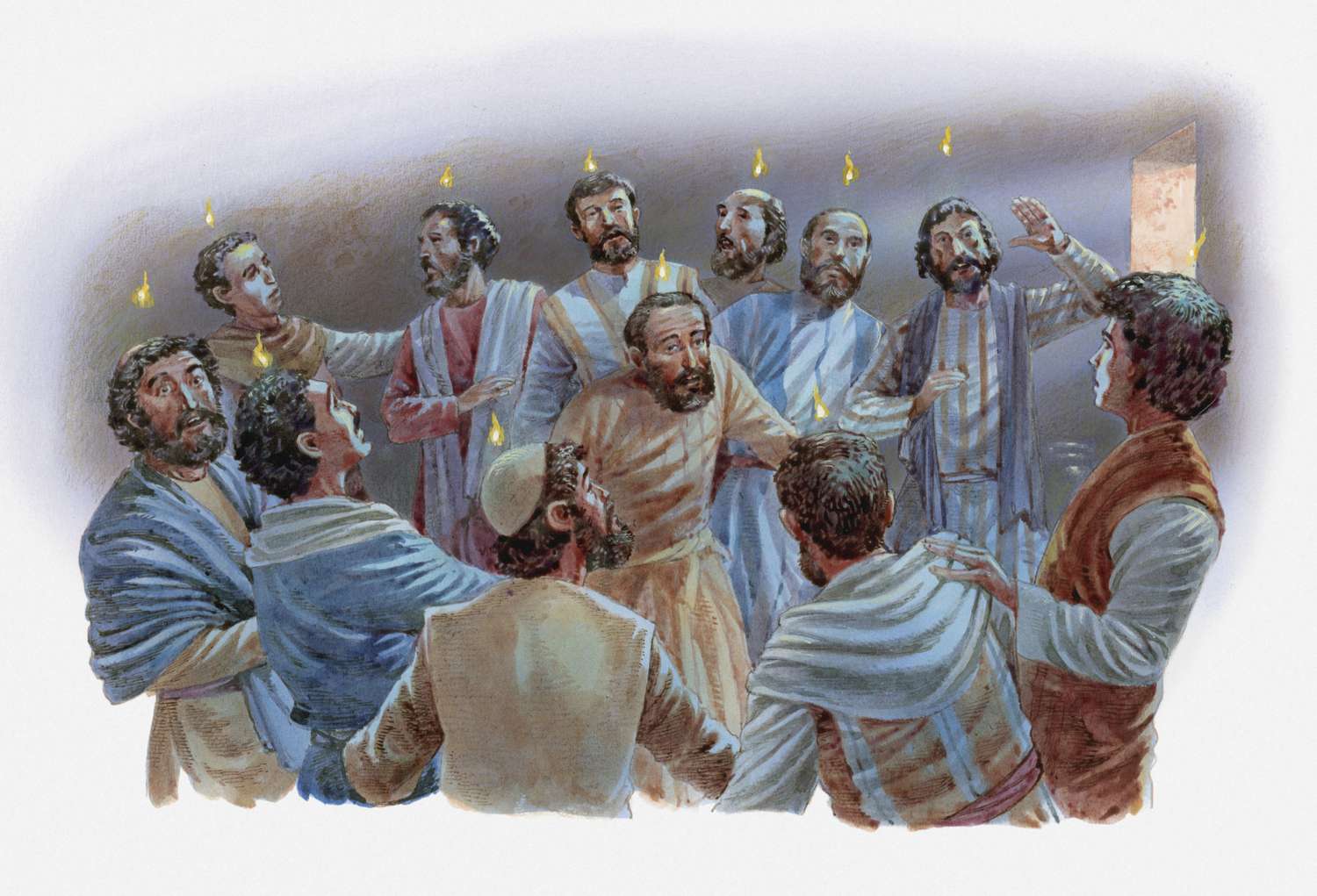
Tongues: Do Only Those Who Speak in Tongues Have the Holy Spirit?

Tongues: Is It Evidence of the Holy Spirit

Do Only Those Who Speak in Tongues Have the Holy Spirit?

Question:


Many say that those who do not speak in other tongues do not have the Holy Spirit. Do only those who have other tongues have the Holy Spirit?

Answer:

This question has caused confusion for many sincere believers. Scripture gives a clear and balanced answer when we read Paul’s teaching in context—especially 1 Corinthians chapters 12–14.

The Context of Paul’s Teaching

Paul wrote to the Corinthian church to correct serious problems: division, immorality, spiritual immaturity, and confusion in their worship services. In chapters 12–14, he focuses on the work of the Holy Spirit in the church. His purpose is not to create spiritual competition, but to show how the Spirit unifies believers rather than divides them.

  • Chapter 12 – The Holy Spirit distributes spiritual gifts among believers.
  • Chapter 13 – Spiritual gifts must operate through love.
  • Chapter 14 – Worship services should be orderly and edifying.

“Concerning Spiritual Things” (1 Corinthians 12:1–3)

In verse 1, the King James Version inserts the word “gifts.” It is italicized, indicating it is not in the original Greek text. Paul is first addressing spiritual matters and doctrines, not merely gifts.

Paul says, “I would not have you ignorant.” In his letters, he highlights three areas Christians should understand clearly:

  • God’s plan for Israel – Romans 11:25
  • Spiritual truth and doctrine – 1 Corinthians 12:1
  • The resurrection and eternal hope – 1 Thessalonians 4:13

He reminds believers that the Holy Spirit:

  • Does not promote Himself or elevate individuals.
  • Glorifies Jesus Christ and testifies of Him (John 15:26).

Diversities, but the Same Spirit (1 Corinthians 12:4–6)

Paul explains that there are:

  • Different gifts – spiritual abilities.
  • Different ministries – roles or offices in the church.
  • Different operations – ways God works through believers.

Though the expressions differ, the same Holy Spirit is the source of them all.

The Manifestation of the Spirit (1 Corinthians 12:7–11)

The word manifestation means an outward display of the Spirit’s work for the benefit of the entire church, not personal recognition. Paul lists several gifts, including wisdom, knowledge, faith, healing, miracles, prophecy, discerning of spirits, tongues, and interpretation of tongues.

The Place of Tongues

Tongues are a legitimate spiritual gift, but Scripture makes several important points:

  • Tongues have value in personal devotion, but a limited role in public worship (1 Corinthians 14:18–19, 23).
  • In church gatherings, tongues must be interpreted and exercised with order (1 Corinthians 14:27–28).
  • The ability to speak in tongues is not given to every believer (1 Corinthians 12:30).
  • Tongues are not the proof of being filled with the Holy Spirit. When treated as proof, people may feel pressure to imitate or counterfeit the experience.

The Holy Spirit distributes gifts “as He wills,” not as people demand.

One Body, Many Members (1 Corinthians 12:12–31)

Paul compares the church to the human body:

  • Believers are spiritually baptized into one body—into Christ.
  • The body has many parts, each with a different function.
  • No single gift defines the whole body.

God assigns gifts according to His wisdom and purpose, not according to human expectations. Diversity of gifts is not a weakness—it is God’s design for unity.

Conclusion

The Bible does not teach that speaking in tongues is the evidence of possessing the Holy Spirit. The presence of the Holy Spirit is seen in a believer’s faith in Christ, transformed life, love for others, and participation in the body of Christ—not in the possession of one particular gift.

Tongues are a genuine gift, but they are not universal, not required, and not the measure of spirituality. The Holy Spirit gives different gifts to different believers so that the church functions like a healthy body—many parts, one Spirit, all working together for the glory of Jesus Christ.


Dr. Alan Holden has served in pastoral ministry for more than 35 years, preaching and teaching the Bible in churches across the United States. He holds a Doctor of Ministry from Luther Rice Seminary and a Master of Divinity from The Southern Baptist Theological Seminary. Through What’s It Mean?, he seeks to help readers understand the meaning of Scripture and grow in their walk with Christ. He is currently the pastor of Lake Saunders Baptist Church in Tavares, FL.


If this article helped you, you may enjoy the Free 7-Day Eternal Life Devotional.


Download the Free 7-Day Devotional