






A Simple, Biblical Explanation of Ezekiel 18
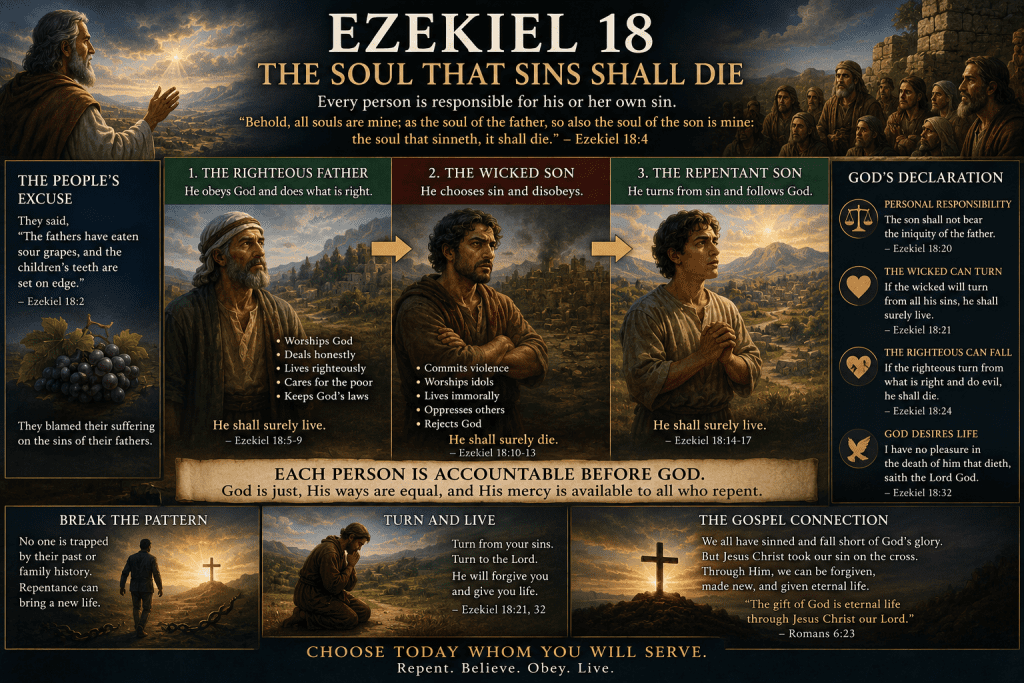 Ezekiel 18 is one of the clearest chapters in the Old Testament about personal responsibility before God. The people of Judah blamed their suffering on previous generations instead of facing their own sin.
But God declared that every person is accountable for his or her own relationship with Him.
This chapter teaches that:
- God is perfectly just;
- every person must personally respond to God;
- repentance brings life;
- persistent rebellion leads to judgment.
At its heart, Ezekiel 18 is not merely about punishment — it is a passionate call for sinners to turn back to God and live.
The Historical Background
The Jewish people were suffering under Babylonian judgment. Many complained that they were paying for the sins of their fathers.
They used a popular proverb:
“The fathers have eaten sour grapes, and the children’s teeth are set on edge.” — Ezekiel 18:2
In other words:
“Our parents sinned, and now we are suffering for it.”
The people were shifting blame away from themselves.
God responds by rejecting this excuse.
God’s Declaration: Every Soul Belongs to Him
God begins with a powerful statement:
“Behold, all souls are mine.” — Ezekiel 18:4
Every human being belongs to God because He is the Creator.
No one escapes His authority.
Then God announces the central truth of the chapter:
“The soul that sinneth, it shall die.” — Ezekiel 18:4
This refers primarily to spiritual judgment and separation from God.
Sin always carries consequences.
The Righteous Man Lives
The Example of a Godly Man
God describes a righteous man who:
- worships the Lord alone;
- treats others honestly;
- avoids immorality;
- cares for the poor;
- obeys God’s commandments.
This man “shall surely live.”
Important Truth
Salvation was never earned by good works. Rather, righteous living reveals genuine faith in God.
True faith affects how people live.
The Wicked Son Dies
A Different Generation
Next, God describes the righteous man’s son.
Unlike his father, this son becomes violent, immoral, and idolatrous.
Even though he had a godly father, he would still face judgment for his own sin.
Lesson
A godly heritage cannot save a rebellious heart.
Every person must personally know and obey God.
The Grandson Turns Back to God
Breaking the Pattern
Then God introduces a third generation.
This grandson sees his father’s wickedness and chooses a different path.
He repents and walks in God’s ways.
God declares that he will live.
Application
No one is trapped forever by family history.
A person raised in sin can still turn to God.
Likewise, someone raised in a godly home must still personally choose faith.
Personal Responsibility Before God
Each Person Answers for Himself
God repeats the principle clearly:
“The son shall not bear the iniquity of the father.” — Ezekiel 18:20
Every person stands accountable before God individually.
This Does NOT Mean Sin Has No Influence
Family sin affects future generations in many ways:
- emotionally;
- spiritually;
- socially;
- morally.
But each individual is still personally responsible for his or her choices before God.
God’s Mercy Toward the Repentant
The Wicked Can Turn and Live
One of the most hopeful truths in this chapter is God’s promise to forgive the repentant sinner.
“If the wicked will turn from all his sins… he shall surely live.” — Ezekiel 18:21
God delights in repentance and restoration.
No sinner is beyond God’s mercy.
The Danger of Turning Away
God also warns that a righteous person who abandons righteousness and embraces sin faces judgment.
This does not teach salvation by works. Rather, it reveals that genuine faith must continue in obedience.
Outward religion without a faithful heart cannot save.
“The Way of the Lord Is Equal”
The people accused God of being unfair.
But God turns the accusation back on them.
The real problem was not God’s justice — it was their sinful hearts.
Important Truth
God’s judgments are always righteous.
Human beings naturally excuse their own sin while questioning God’s holiness.
God Takes No Pleasure in Judgment
One of the most beautiful verses in Ezekiel appears here:
“For I have no pleasure in the death of him that dieth, saith the Lord GOD.” — Ezekiel 18:32
God is holy and must judge sin.
But judgment is not His delight.
God calls sinners to repentance because He desires life, not destruction.
The Gospel in Ezekiel 18
Ezekiel 18 exposes humanity’s greatest problem:
Every individual is guilty before God because of sin.
No one can blame:
- parents;
- society;
- culture;
- upbringing;
- circumstances.
Each person must personally answer to God.
This chapter prepares the way for the Gospel.
The New Testament teaches:
“For all have sinned.” — Romans 3:23
But it also declares that Jesus Christ came to bear the judgment sinners deserve.
At the cross:
- Christ took our guilt;
- justice was satisfied;
- forgiveness became available.
Through faith in Jesus:
- sinners receive mercy;
- hearts are transformed;
- spiritual death gives way to eternal life.
Lessons We Must Learn
1. Every Person Is Personally Responsible Before God
We cannot blame others for our spiritual condition.
2. Family History Does Not Determine Destiny
A person can break sinful patterns through repentance and faith.
3. God Welcomes the Repentant
No matter how far someone has fallen, God still calls sinners to turn back to Him.
4. God Is Perfectly Just
His judgments are always righteous and fair.
5. God Desires Life, Not Destruction
God’s warnings are invitations to repentance.
6. Salvation Requires a Changed Heart
True repentance involves turning away from sin and turning toward God.
Conclusion
Ezekiel 18 is a powerful chapter about personal responsibility, repentance, and the mercy of God.
The people wanted to blame previous generations for their problems, but God called each individual to examine his own heart.
The message remains deeply relevant today.
Every person must personally respond to God.
No one is saved through family heritage, religion, or outward appearances.
Yet the chapter also overflows with hope:
The sinner who turns to God can live.
That hope is fully realized in Jesus Christ, who died and rose again so guilty sinners could receive forgiveness, new life, and eternal salvation.
<<Back to Bible Passages
For more insights to the Book of Ezekiel, order Pastor Alan’s book from the links below.
Dr. Alan Holden has served in pastoral ministry for more than 35 years, preaching and teaching the Bible in churches across the United States. He holds a Doctor of Ministry from Luther Rice Seminary and a Master of Divinity from The Southern Baptist Theological Seminary. Through What’s It Mean?, he seeks to help readers understand the meaning of Scripture and grow in their walk with Christ. He is currently the pastor of Lake Saunders Baptist Church in Tavares, FL.