







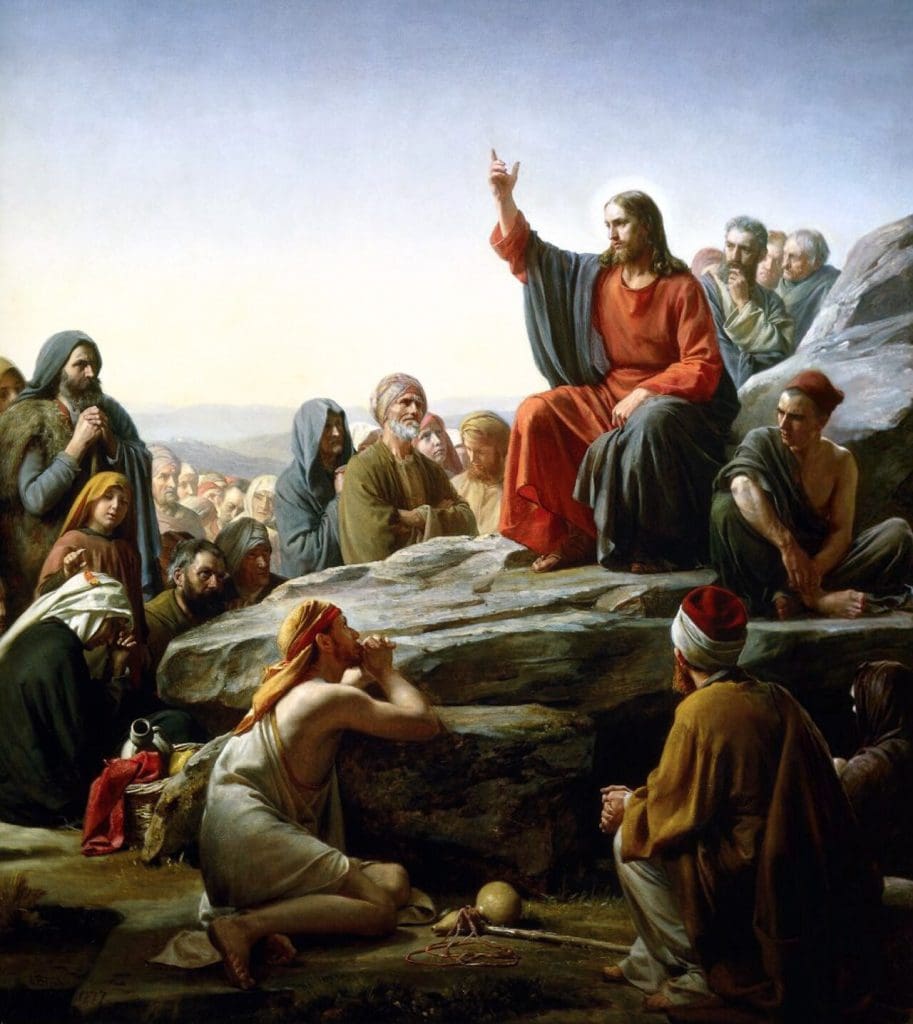
Matthew 5 Explained: The Meaning of the Sermon on the Mount
Introduction
Matthew 5 begins the most famous sermon ever preached—the Sermon on the Mount. In this chapter, Jesus Christ explains what true righteousness looks like in the Kingdom of Heaven.
The religious leaders of Jesus’ day emphasized external religion—rules, traditions, and appearances. But Jesus teaches that God is concerned with something deeper: the condition of the heart.
Matthew 5 reveals the character of those who truly belong to God’s kingdom.
“Except your righteousness shall exceed the righteousness of the scribes and Pharisees, ye shall in no case enter into the kingdom of heaven.”
— Matthew 5:20
In other words, Jesus is not calling for more religion, but for true transformation.
The Beatitudes: The Character of Kingdom Citizens
(Matthew 5:1–12)
The chapter opens with the Beatitudes. The word beatitude means blessing or deep spiritual joy.
Jesus describes the inner qualities that mark those who belong to Him.
Blessed Are the Poor in Spirit
“Blessed are the poor in spirit: for theirs is the kingdom of heaven.” (Matthew 5:3)
To be poor in spirit means recognizing our spiritual poverty before God. It is the opposite of pride. Salvation begins when we realize we cannot save ourselves.
Blessed Are Those Who Mourn
This mourning refers to grief over sin. Those who see their sin clearly will seek God’s forgiveness and comfort.
Blessed Are the Meek
Meekness is strength under control. It is humility that submits to God rather than insisting on its own way.
Blessed Are Those Who Hunger and Thirst for Righteousness
True believers develop a deep desire to know God and live rightly before Him.
Just as the body craves food and water, the believer longs for holiness.
Blessed Are the Merciful
Those who have received God’s mercy naturally show mercy to others.
Blessed Are the Pure in Heart
God is not impressed with outward religion if the heart remains corrupt. Purity of heart means sincerity, integrity, and devotion to God.
Blessed Are the Peacemakers
Peacemakers bring reconciliation—both between people and between sinners and God.
Blessed Are Those Who Are Persecuted
Those who live faithfully for Christ will eventually face opposition.
Yet Jesus declares that such people are blessed, because they belong to the kingdom of heaven.
Salt and Light: The Influence of Believers
(Matthew 5:13–16)
After describing the character of believers, Jesus explains their influence in the world.
You Are the Salt of the Earth
Salt had several important uses in the ancient world:
- It preserved food from decay
• It added flavor
• It symbolized purity
Believers serve a similar purpose in society. Their presence restrains moral decay and preserves truth.
But Jesus warns that salt that loses its saltiness becomes useless. Likewise, a believer who compromises with the world loses spiritual influence.
You Are the Light of the World
Light exposes darkness and guides people to safety.
Jesus compares believers to:
“A city that is set on a hill.”
Such a city cannot be hidden. The lives of believers should shine in such a way that others see God through them.
“Let your light so shine before men, that they may see your good works, and glorify your Father which is in heaven.” (Matthew 5:16)
Jesus and the Law
(Matthew 5:17–20)
Some people believed Jesus was rejecting the Old Testament law. He corrected that misunderstanding immediately.
“Think not that I am come to destroy the law, or the prophets: I am not come to destroy, but to fulfil.” (Matthew 5:17)
Jesus fulfilled the law in several ways:
- He perfectly obeyed it
• He fulfilled its prophecies
• He completed its purpose
The Old Testament law ultimately pointed forward to Christ.
Yet Jesus also warns that the righteousness of the scribes and Pharisees was not enough. Their religion focused on outward behavior but neglected the heart.
True righteousness begins inside.
The Heart Behind the Commandments
(Matthew 5:21–48)
Jesus then explains the deeper meaning of several commandments.
The religious leaders had reduced God’s law to mere rule-keeping. Jesus reveals that the law addresses the heart itself.
Anger and Murder
The commandment says:
“Thou shalt not kill.”
But Jesus teaches that uncontrolled anger and hatred are the seeds of murder. God cares about the attitudes that lead to sinful actions.
Lust and Adultery
The law forbids adultery. Yet Jesus shows that lustful thoughts violate God’s standard as well.
Sin begins in the heart long before it appears in outward behavior.
Divorce
Jesus teaches that marriage was intended to be a lifelong covenant. Casual divorce had become common in His day, but it was never God’s design.
Oaths and Truthfulness
People often used elaborate vows to convince others they were telling the truth.
Jesus teaches that believers should be known for simple honesty:
“Let your communication be, Yea, yea; Nay, nay.”
A Christian’s word should always be trustworthy.
Revenge and Retaliation
The law permitted courts to enforce justice—“an eye for an eye.” But individuals were not meant to take revenge.
Jesus calls His followers to respond with grace rather than retaliation.
Love Your Enemies
Perhaps the most challenging command in the chapter is this:
“Love your enemies.”
God shows kindness even to those who reject Him. Followers of Christ must reflect that same love.
Jesus concludes with a powerful challenge:
“Be ye therefore perfect, even as your Father which is in heaven is perfect.” (Matthew 5:48)
This does not mean sinless perfection. It means believers should strive for complete maturity and Christlike character.
What’s the Meaning of Matthew 5?
Matthew 5 teaches that God desires transformed hearts, not merely religious behavior.
True righteousness includes:
- humility before God
• repentance over sin
• mercy toward others
• purity of heart
• faithfulness even in persecution
These qualities do not come from human effort alone. They are the result of a life changed by the grace of God.
Jesus calls His followers to live differently—to shine as salt and light in a dark world.
Final Reflection
Matthew 5 challenges us to examine ourselves honestly.
Do we simply practice religion, or have we experienced genuine transformation?
The message of the Sermon on the Mount reminds us that the kingdom of heaven belongs to those whose hearts have been changed by Christ.
<<Back to Bible Passages
Dr. Alan Holden has served in pastoral ministry for more than 35 years, preaching and teaching the Bible in churches across the United States. He holds a Doctor of Ministry from Luther Rice Seminary and a Master of Divinity from The Southern Baptist Theological Seminary. Through What’s It Mean?, he seeks to help readers understand the meaning of Scripture and grow in their walk with Christ. He is currently the pastor of Lake Saunders Baptist Church in Tavares, FL.
If this article helped you, you may enjoy the Free 7-Day Eternal Life Devotional.