







Introduction
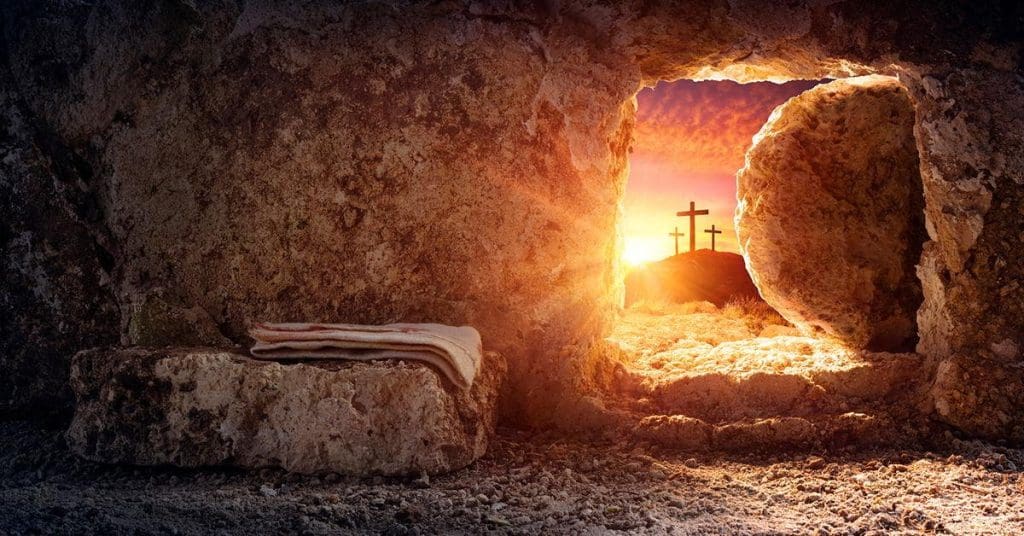
John 20 records the greatest victory in human history—the resurrection of Jesus Christ.
The cross demonstrated God’s love. The empty tomb demonstrated God’s power.
Without the resurrection, Christianity would be nothing more than a collection of teachings from a dead teacher. But because Jesus rose from the grave, He is the living Savior who offers forgiveness, eternal life, and hope to all who believe.
The resurrection is the foundation of the Christian faith. Every promise Jesus made depends upon the reality of this event.
John 20 tells the story of the empty tomb, the appearances of the risen Christ, the restoration of fearful disciples, and the confession of faith by Thomas.
Mary Magdalene Discovers the Empty Tomb (John 20:1-2)
Early on the first day of the week, while it was still dark, Mary Magdalene came to the tomb.
To her shock, the stone had been rolled away.
Immediately she ran to tell Peter and John:
“They have taken away the Lord out of the sepulchre” (John 20:2).
At this point, Mary assumed someone had moved the body.
She had not yet realized that Jesus had risen from the dead.
Application
Sometimes God is doing something wonderful when all we can see is confusion.
The empty tomb initially appeared to be a problem. In reality, it was the beginning of the greatest victory in history.
Peter and John Visit the Tomb (John 20:3-10)
Peter and John raced to the tomb.
John arrived first but waited outside.
Peter entered immediately and found the burial cloths lying neatly in place.
John then entered and observed the evidence.
“And he saw, and believed” (John 20:8).
The orderly arrangement of the grave clothes indicated that this was not a grave robbery.
Jesus had risen.
The disciples did not yet fully understand the Scriptures concerning the resurrection, but the evidence before them was undeniable.
Application
Christian faith is not blind faith.
The resurrection rests upon historical evidence, eyewitness testimony, and fulfilled prophecy.
Jesus Appears to Mary Magdalene (John 20:11-18)
After Peter and John departed, Mary remained at the tomb weeping.
She looked inside and saw two angels.
Then she turned and saw Jesus standing nearby.
Yet she did not recognize Him.
Assuming He was the gardener, she asked where the body had been taken.
Then Jesus spoke a single word:
“Mary.”
Immediately she recognized Him.
“Rabboni!” (Teacher)
What a beautiful moment.
The first person to see the risen Christ was not a king, a priest, or a government official.
It was a faithful follower whose heart was devoted to Him.
The Personal Nature of the Resurrection
Jesus knew Mary’s name.
The Good Shepherd still knows His sheep by name.
The resurrection is not merely a theological truth. It is a personal reality involving a living Savior who knows and loves His people.
Application
In moments of grief and confusion, Jesus often reveals Himself most clearly.
The risen Christ meets believers where they are and calls them by name.
Jesus Appears to the Disciples (John 20:19-23)
That evening the disciples gathered behind locked doors.
Fear filled their hearts.
They worried that they might suffer the same fate as Jesus.
Suddenly Jesus appeared in their midst.
His first words were:
“Peace be unto you” (John 20:19).
Showing the Evidence
Jesus showed them His hands and His side.
The scars remained.
The crucified Christ and the risen Christ were one and the same.
When the disciples saw Him, their fear turned to joy.
The Commission
Jesus then declared:
“As my Father hath sent me, even so send I you” (John 20:21).
The disciples were not merely to celebrate the resurrection.
They were to proclaim it.
Application
The resurrection transforms fearful believers into courageous witnesses.
The same Christ who commissioned the apostles calls Christians today to share the Gospel.
Thomas Doubts (John 20:24-29)
Thomas was absent when Jesus first appeared.
When the other disciples told him what had happened, he refused to believe.
“Except I shall see in his hands the print of the nails… I will not believe” (John 20:25).
Jesus Appears Again
Eight days later Jesus appeared once more.
This time Thomas was present.
Jesus invited him to examine the evidence.
“Reach hither thy finger” (John 20:27).
Confronted with the risen Christ, Thomas responded with one of the greatest confessions in Scripture:
“My Lord and my God” (John 20:28).
Thomas moved from doubt to worship.
Blessed Are Those Who Believe
Jesus then said:
“Blessed are they that have not seen, and yet have believed” (John 20:29).
This promise extends to every believer today.
Though we have not physically seen the risen Christ, we trust the testimony of Scripture and the witness of the apostles.
Application
God is patient with honest questions.
Thomas doubted, but Jesus graciously provided what he needed to believe.
Faith ultimately leads us to the same conclusion:
Jesus is Lord and God.
The Purpose of John’s Gospel (John 20:30-31)
John concludes the chapter by explaining why he wrote his Gospel.
“Many other signs truly did Jesus… which are not written in this book” (John 20:30).
John selected specific miracles and events for a purpose.
That purpose is clearly stated:
“That ye might believe that Jesus is the Christ, the Son of God” (John 20:31).
And believing, readers receive:
“Life through his name.”
This verse serves as the theme statement for the entire Gospel of John.
Application
The goal of Scripture is not merely information.
The goal is transformation through faith in Jesus Christ.
Lessons from John 20
1. The Resurrection Is Historical Reality
The empty tomb and eyewitness testimony confirm Christ’s victory over death.
2. Jesus Knows His Followers Personally
Just as He called Mary by name, He knows every believer today.
3. Fear Can Be Replaced by Peace
The risen Christ brought peace to fearful disciples.
4. Doubt Can Lead to Stronger Faith
Thomas’ questions ultimately led him to one of Scripture’s strongest confessions.
5. The Resurrection Produces Mission
Believers are called to proclaim the good news of the risen Savior.
6. Eternal Life Comes Through Faith
John’s Gospel was written so people might believe and receive life in Christ.
Conclusion
John 20 stands at the heart of the Christian message.
The tomb is empty.
Death has been defeated.
Jesus Christ is alive.
Mary’s tears turned to joy. The disciples’ fear turned to peace. Thomas’ doubt turned to worship.
The resurrection changed everything.
Because Jesus lives, sinners can be forgiven.
And because Jesus lives, believers can have hope.
Also because Jesus lives, death no longer has the final word.
John’s purpose remains the same today as when he first wrote these words:
“That ye might believe that Jesus is the Christ, the Son of God; and that believing ye might have life through his name.”
The resurrection is not merely a past event. It is the foundation of our present faith and our future hope.
<<Back to John 19 OR Forward to John 21>>
<<Back to Gospel of John
For more insights to the Gospel of John, order Pastor Alan’s book, Come and See, from the links below.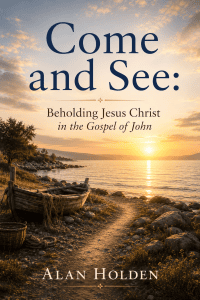
Dr. Alan Holden has served in pastoral ministry for more than 35 years, preaching and teaching the Bible in churches across the United States. He holds a Doctor of Ministry from Luther Rice Seminary and a Master of Divinity from The Southern Baptist Theological Seminary. Through What’s It Mean?, he seeks to help readers understand the meaning of Scripture and grow in their walk with Christ. He is currently the pastor of Lake Saunders Baptist Church in Tavares, FL.