







Introduction
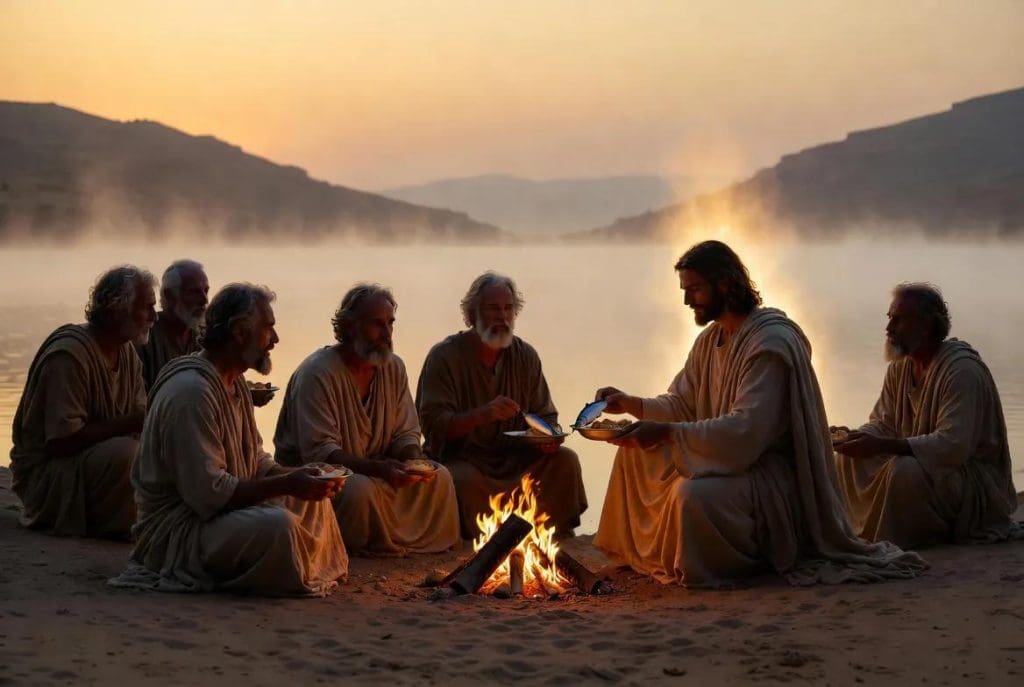
John 21 serves as a beautiful epilogue to the Gospel of John. The resurrection has already been established in Chapter 20, and John has stated his purpose for writing the Gospel. Yet the Holy Spirit inspired one final chapter that provides important lessons about restoration, discipleship, and service.
The chapter focuses primarily on Peter, who had denied Jesus three times during the Lord’s trial. After the resurrection, Peter undoubtedly carried the weight of guilt and failure.
John 21 demonstrates that failure is never the end of the story for those who truly belong to Christ.
The risen Savior restores Peter, recommissions him for ministry, and reminds all believers of their calling to follow Him faithfully.
The Miraculous Catch of Fish (John 21:1-14)
After the resurrection, several disciples returned to the Sea of Galilee.
Peter announced:
“I go a fishing” (John 21:3).
The others joined him.
A Night of Failure
They fished all night and caught nothing.
Many of these men were experienced fishermen, yet their efforts produced no results.
As morning approached, a man stood on the shore and asked:
“Children, have ye any meat?” (John 21:5).
They answered:
“No.”
The stranger instructed them:
“Cast the net on the right side of the ship” (John 21:6).
When they obeyed, the net filled with fish.
Recognizing Jesus
John immediately recognized what was happening.
“It is the Lord” (John 21:7).
Peter, characteristically impulsive, jumped into the water and swam toward shore.
The other disciples followed in the boat, dragging the overflowing net.
Breakfast with Jesus
When they arrived, they found Jesus waiting beside a charcoal fire with fish and bread prepared.
The risen Savior shared breakfast with His disciples.
This simple meal demonstrates Christ’s care and fellowship.
The Lord who conquered death still cared about the needs of His followers.
Application
Success in ministry depends upon Christ’s direction and power.
The disciples labored all night without results. When they obeyed Jesus, their efforts became fruitful.
The same principle remains true today.
Jesus Restores Peter (John 21:15-19)
This section forms the heart of the chapter.
Peter had denied Jesus three times beside a fire in the courtyard of the high priest.
Now Jesus restores Peter beside another fire on the shore of Galilee.
The First Question
Jesus asked:
“Simon, son of Jonas, lovest thou me more than these?” (John 21:15).
Peter answered:
“Yea, Lord; thou knowest that I love thee.”
Jesus replied:
“Feed my lambs.”
The Second Question
Again Jesus asked:
“Lovest thou me?”
Peter again affirmed his love.
Jesus answered:
“Feed my sheep.”
The Third Question
For a third time Jesus asked:
“Lovest thou me?”
Peter became grieved because Jesus asked three times.
The three questions mirrored Peter’s three denials.
Each affirmation of love helped restore what had been broken.
Peter responded:
“Lord, thou knowest all things; thou knowest that I love thee.”
Jesus replied:
“Feed my sheep.”
The Meaning of Restoration
Jesus did not ignore Peter’s failure.
Neither did He condemn him endlessly for it.
Instead, Jesus restored him and entrusted him with ministry.
Peter’s future would not be defined by his denial but by God’s grace.
Application
Many believers carry the burden of past failures.
John 21 reminds us that Christ specializes in restoration.
Failure is not final when grace is present.
Peter’s Future Service and Sacrifice (John 21:18-19)
Jesus then revealed something about Peter’s future.
One day Peter would glorify God through his death.
Church tradition tells us that Peter was eventually martyred for his faith.
The man who once denied Jesus out of fear would later stand boldly for Christ unto death.
The Call to Follow
After describing Peter’s future, Jesus gave a simple command:
“Follow me” (John 21:19).
This command summarizes the Christian life.
Believers are called to follow Jesus wherever He leads.
Application
God can transform fearful failures into faithful servants.
Peter’s life proves that God’s grace is stronger than our weaknesses.
Peter’s Question About John (John 21:20-23)
Peter noticed John following behind them and asked:
“Lord, and what shall this man do?” (John 21:21).
Jesus responded:
“If I will that he tarry till I come, what is that to thee? follow thou me” (John 21:22).
In other words, Peter’s responsibility was not to manage John’s future.
His responsibility was to follow Christ.
Avoiding Comparisons
Believers often compare their calling, gifts, opportunities, or circumstances with those of others.
Jesus reminds us that discipleship is personal.
God has unique plans for each believer.
Application
The Christian life becomes frustrating when we focus on others.
The call of Christ is simple:
“Follow thou me.”
John’s Final Testimony (John 21:24-25)
The Gospel concludes with John’s testimony concerning the truthfulness of his account.
He identifies himself as the disciple who witnessed these events.
Then John closes with a remarkable statement:
“And there are also many other things which Jesus did” (John 21:25).
John acknowledges that no single book could contain everything Jesus accomplished.
The works of Christ are so vast and glorious that the world itself could not contain all the books that might be written.
Application
The Gospel of John provides everything necessary for faith and salvation, yet it only introduces us to the greatness of Christ.
Throughout eternity believers will continue discovering the wonders of their Savior.
Major Themes in John 21
1. Jesus Restores Fallen Believers
Peter’s restoration demonstrates the power of grace.
2. Love for Christ Leads to Service
Those who truly love Jesus will care for His people.
3. Ministry Depends Upon Christ
Fruitfulness comes through obedience and dependence upon Him.
4. Every Believer Has a Unique Calling
God’s plans differ from person to person.
5. The Christian Life Is About Following Jesus
Discipleship is not complicated.
The essential call is to follow Christ faithfully.
Lessons from John 21
1. Failure Does Not Disqualify Us Forever
God often uses broken people who have experienced His grace.
2. Christ Knows Our Hearts
Peter could honestly say:
“Lord, thou knowest all things.”
3. Genuine Love Produces Action
Love for Jesus should result in faithful service.
4. Comparisons Are Unproductive
God calls each believer to focus on their own walk with Him.
5. Jesus Continues to Work Through His People
The risen Christ still guides, restores, and commissions His followers.
Conclusion
John 21 closes the Gospel with hope and restoration.
Peter’s story could have ended with denial and failure. Instead, it became a story of forgiveness, grace, and renewed purpose.
The risen Christ met Peter where he was, restored him, and recommissioned him for service.
The same Savior continues to restore believers today.
No failure is too great for His grace.
No mistake is beyond His forgiveness.
The final words Jesus emphasized to Peter remain His call to every disciple:
“Follow me.”
That invitation continues today.
And those who follow Christ discover that His grace is sufficient, His power is enough, and His purpose is worth every sacrifice.
<<Back to John 20
<<Back to Gospel of John
For more insights to the Gospel of John, order Pastor Alan’s book, Come and See, from the links below.
Dr. Alan Holden has served in pastoral ministry for more than 35 years, preaching and teaching the Bible in churches across the United States. He holds a Doctor of Ministry from Luther Rice Seminary and a Master of Divinity from The Southern Baptist Theological Seminary. Through What’s It Mean?, he seeks to help readers understand the meaning of Scripture and grow in their walk with Christ. He is currently the pastor of Lake Saunders Baptist Church in Tavares, FL.