






Introduction
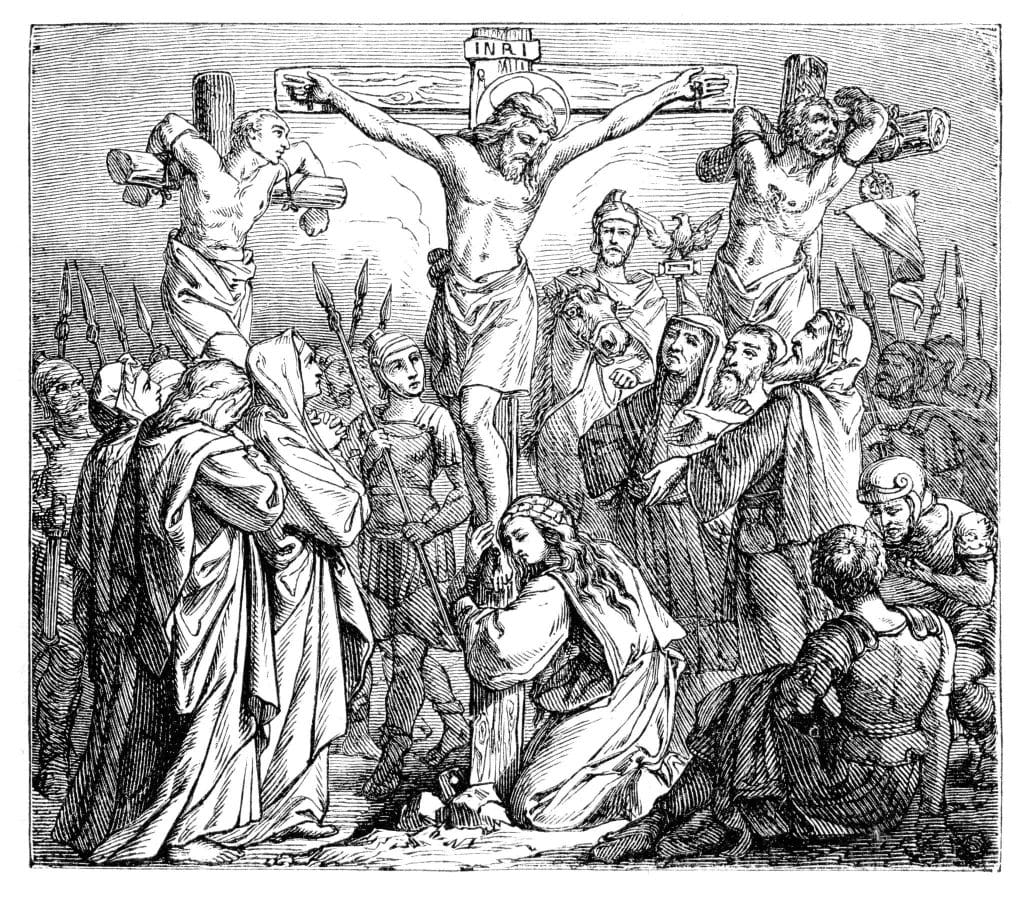
John 19 records the most significant event in human history: the crucifixion of Jesus Christ.
Everything in the Gospel of John has been moving toward this moment. The miracles, the teachings, the signs, and the confrontations all point to the cross. Here the Son of God willingly offers Himself as the sacrifice for the sins of the world.
This chapter reveals both the cruelty of humanity and the immeasurable love of God. Jesus is mocked, beaten, rejected, and crucified. Yet through His suffering, Jesus accomplished salvation.
John 19 reminds us that the cross was not a tragic accident. Jesus fulfilled God’s eternal plan to redeem sinners.
Jesus Condemned (John 19:1-16)
After questioning Jesus, Pilate still believed Him to be innocent. Nevertheless, he scourged Jesus.
The Mockery of the King
The Roman soldiers cruelly mocked Jesus.
They placed a crown of thorns upon His head and draped Him in a purple robe.
Then they mocked Him, saying:
“Hail, King of the Jews!” (John 19:3).
Ironically, their mockery proclaimed a profound truth. Jesus truly was the King, though not the kind of king they expected.
“Behold the Man!”
Pilate presented the wounded Jesus to the crowd and declared:
“Behold the man!” (John 19:5).
The battered Savior stood before them, bruised and bleeding.
Yet the crowd showed no mercy.
Instead they shouted:
“Crucify him, crucify him!”
Pilate’s Fear
When Pilate learned that Jesus claimed to be the Son of God, he became increasingly fearful.
Jesus reminded Pilate that all authority ultimately comes from God:
“Thou couldest have no power at all against me, except it were given thee from above” (John 19:11).
Though Pilate occupied a position of earthly power, he remained subject to God’s sovereign authority.
The Final Rejection
Pilate tried once more to release Jesus.
The religious leaders responded:
“We have no king but Caesar” (John 19:15).
In rejecting Jesus, they rejected their true King.
Pilate finally surrendered to political pressure and delivered Jesus to be crucified.
Application
The crowd was forced to choose between Jesus and worldly power.
People still face that choice today.
Every person must decide whether Christ will be King of their life.
Jesus Carries His Cross (John 19:17)
John records:
“And he bearing his cross went forth into a place called the place of a skull” (John 19:17).
The place was known in Hebrew as Golgotha.
Jesus carried the instrument of His execution toward the hill where He would die.
Every step demonstrated His willingness to fulfill the Father’s plan.
Application
Jesus bore the cross so that believers could receive forgiveness and eternal life.
His suffering reveals the seriousness of sin and the greatness of God’s love.
The Crucifixion (John 19:18-27)
Nailed to the Cross
John simply states:
“Where they crucified him” (John 19:18).
The Gospel writers do not dwell on the physical details because their focus is on the meaning of the cross.
Jesus was crucified between two criminals.
The sinless Son of God took His place among sinners.
The Inscription Above the Cross
Pilate ordered a sign to be placed above Jesus:
“JESUS OF NAZARETH THE KING OF THE JEWS” (John 19:19).
The religious leaders objected, but Pilate refused to change it.
God used even a Roman governor to proclaim the truth about His Son.
The Soldiers Divide His Garments
The soldiers cast lots for Jesus’ clothing.
This fulfilled Psalm 22:18:
“They parted my raiment among them.”
Even in the smallest details, Scripture was being fulfilled.
Jesus Cares for His Mother
While hanging on the cross, Jesus noticed His mother standing nearby.
He entrusted her care to the Apostle John:
“Woman, behold thy son!” (John 19:26).
Even amid unimaginable suffering, Jesus demonstrated love and compassion.
Application
The cross reveals both the justice and mercy of God.
Sin required payment, and Jesus willingly paid the price.
“It Is Finished” (John 19:28-30)
These verses contain one of the most powerful statements in Scripture.
Jesus’ Final Declaration
Knowing that everything had been accomplished, Jesus said:
“I thirst” (John 19:28).
After receiving sour wine, He cried:
“It is finished” (John 19:30).
The Greek word is tetelestai, meaning “paid in full.”
Jesus was not declaring defeat.
He was announcing victory.
The work of redemption was complete.
The debt of sin had been paid.
The sacrifice had been offered.
The way to God had been opened.
Application
Salvation is not based upon human effort.
Jesus finished the work that sinners could never accomplish for themselves.
Believers are saved through faith in Christ’s completed sacrifice.
The Piercing of Jesus’ Side (John 19:31-37)
As the Sabbath approached, the Jewish leaders requested that Pilate to hasten victims’ death. The soldiers began to break their legs.
When the soldiers came to Jesus, they found Him already dead.
Instead, one soldier pierced His side with a spear.
John records:
“Forthwith came there out blood and water” (John 19:34).
This fulfilled additional Old Testament prophecies.
“A bone of him shall not be broken” (John 19:36).
“They shall look on him whom they pierced” (John 19:37).
John emphasizes that he personally witnessed these events and recorded them truthfully.
Application
The fulfillment of prophecy confirms that Jesus truly is the promised Messiah.
The cross was God’s plan from the beginning.
The Burial of Jesus (John 19:38-42)
After Jesus’ death, two unlikely disciples stepped forward.
Joseph of Arimathea
Joseph had been a secret follower of Jesus.
Now he courageously requested Jesus’ body from Pilate.
Nicodemus
Nicodemus, who first visited Jesus by night in John 3, joined Joseph.
He brought a large quantity of spices for burial.
Together they prepared Jesus’ body according to Jewish customs.
Nicodemus and Joseph laid Jesus in a new tomb located in a nearby garden.
The burial appeared final.
But Sunday morning was coming.
Application
God often uses unexpected people to accomplish His purposes.
Joseph and Nicodemus moved from private faith to public commitment when it mattered most.
Lessons from John 19
1. Jesus Willingly Endured the Cross
His sacrifice was voluntary and motivated by love.
2. The Cross Fulfilled God’s Plan
Every detail unfolded according to Scripture.
3. Jesus Is the True King
Though rejected by many, He remains King of kings.
4. Jesus Accomplished Salvation
“It is finished” means Christ completed the work of redemption.
5. Calvary Revealed God’s Love
The cross demonstrates the depth of God’s love for sinners.
6. Faith Must Become Public
Joseph and Nicodemus remind believers to stand openly for Christ.
Conclusion
John 19 takes us to Calvary, where the Son of God died for the sins of the world.
The crown of thorns, the nails, the cross, and the tomb all point to a single truth: God’s love is greater than human sin.
When Jesus cried, “It is finished,” He announced that the work of salvation was complete.
There was nothing more to add.
The Lamb of God had paid the price in full.
And because He finished the work, all who trust in Him can receive forgiveness, peace with God, and the gift of eternal life.
The story does not end at the tomb.
John 20 is coming.
And with it comes the greatest news the world has ever heard: the tomb is empty.
<<Back to John 18 OR Forward to John 20>>
<<Back to Gospel of John
For more insights to the Gospel of John, order Pastor Alan’s book, Come and See, from the links below.
Dr. Alan Holden has served in pastoral ministry for more than 35 years, preaching and teaching the Bible in churches across the United States. He holds a Doctor of Ministry from Luther Rice Seminary and a Master of Divinity from The Southern Baptist Theological Seminary. Through What’s It Mean?, he seeks to help readers understand the meaning of Scripture and grow in their walk with Christ. He is currently the pastor of Lake Saunders Baptist Church in Tavares, FL.