






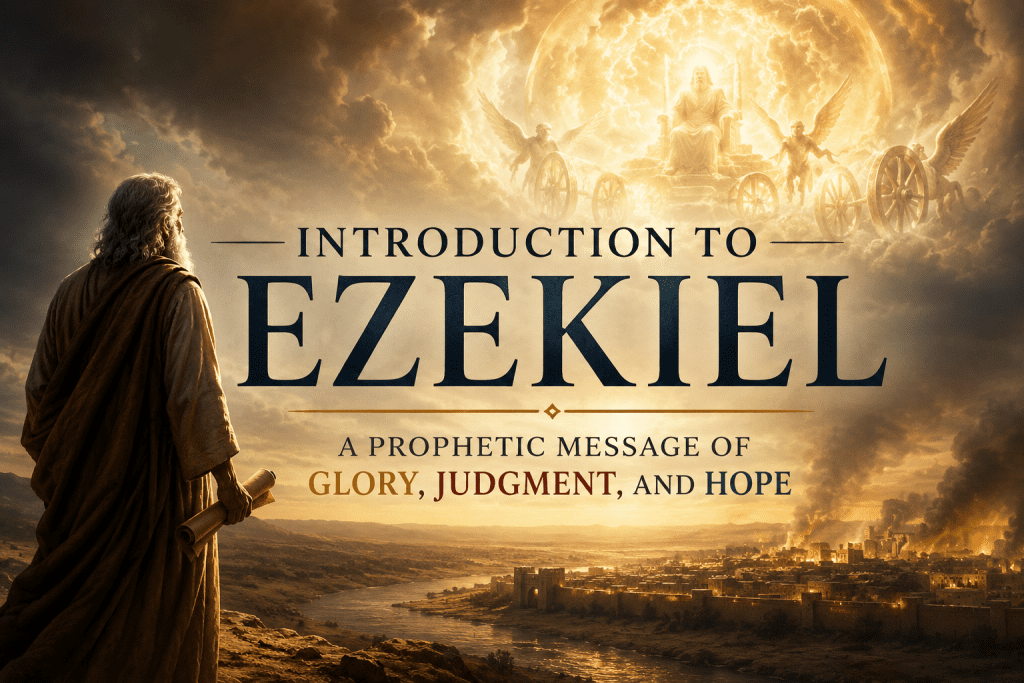
 The book of Ezekiel is one of the most powerful, dramatic, and visually striking books in the entire Bible. Filled with visions, symbols, warnings, and promises of restoration, Ezekiel speaks to people living in a time of confusion, fear, spiritual compromise, and national collapse. In many ways, it speaks directly to our world today.
Prophet and Priest
Ezekiel was both a priest and a prophet. His name means “God strengthens,” and that is exactly what God did in his life. As an introduction to Ezekiel, it’s important to know he ministered during one of the darkest periods in Israel’s history—the Babylonian captivity. Around 597 B.C., he was taken from Jerusalem and carried into exile in Babylon along with thousands of other Jews. Far from home, far from the Temple, and surrounded by a pagan culture, the people wondered if God had abandoned them.
But God had not abandoned them.
Instead, God raised up Ezekiel to proclaim His message to the exiles. Through vivid visions and dramatic object lessons, Ezekiel explained why judgment had come upon Judah and Jerusalem. The people had turned away from God. They embraced idolatry, corruption, false worship, and rebellion against God’s Word. For generations, God had warned them through His prophets, but they refused to listen. In any introduction to Ezekiel, these warnings are central themes.
Introduction to Ezekiel’s Message
The message of Ezekiel unfolds in three major movements:
- Warnings Before Jerusalem’s Fall — God warns His people that judgment is coming because of their sin.
- Explanation During the Fall — After Jerusalem falls, Ezekiel explains why God allowed such devastation.
- Hope After Judgment — God promises restoration, renewal, and future glory for His people.
One of the great themes of Ezekiel is the glory of God. Again and again, Ezekiel reminds us that God is holy, sovereign, and worthy of worship. Even in exile, even in judgment, God remains on the throne. For a full introduction to Ezekiel, understanding his visions of God’s glory is key.
Another major theme is personal responsibility. Ezekiel teaches that every person must respond to God individually. We cannot blame our past, our culture, or others for our spiritual condition.
Yet the book is not only about judgment—it is also about hope.
Ezekiel’s Memorable Promises
Ezekiel contains some of the greatest promises in Scripture:
- The promise of a new heart
- The vision of the Valley of Dry Bones
- The promise that God will once again dwell among His people
These promises ultimately point forward to Jesus Christ, who brings forgiveness, spiritual life, and restoration to all who trust in Him. In summary, the introduction to Ezekiel sets up these great hopes for the future.
Conclusion
The book of Ezekiel reminds us:
- God takes sin seriously
- God’s glory matters most
- God can bring life out of spiritual death
- God still restores broken people
Though written thousands of years ago, Ezekiel’s message remains deeply relevant today. In a world filled with confusion, compromise, and spiritual dryness, the call of Ezekiel is clear: This introduction to Ezekiel encourages us all to examine our hearts.
Turn back to God. Trust His Word. And remember that God is still on the throne.
<<Back to Bible Passages
For more insights to the Book of Ezekiel, order Pastor Alan’s book from the links below.
Dr. Alan Holden has served in pastoral ministry for more than 35 years, preaching and teaching the Bible in churches across the United States. He holds a Doctor of Ministry from Luther Rice Seminary and a Master of Divinity from The Southern Baptist Theological Seminary. Through What’s It Mean?, he seeks to help readers understand the meaning of Scripture and grow in their walk with Christ. He is currently the pastor of Lake Saunders Baptist Church in Tavares, FL.