Holiness

Holiness: What’s It Mean?

holiness
Holiness = set apart from darkness unto light (1 Peter 1:15–16).


Holiness is one of the most important themes in the Bible—and one of the most misunderstood. Some hear the word holiness and think of moral superiority or religious performance. Others assume holiness is outdated or incompatible with grace.

Scripture presents holiness not as pride or legalism, but as God’s purpose for His redeemed people.

What Is Holiness in the Bible?

In the Bible, holiness means being set apart for God. At its core, it is about belonging to God and reflecting His character.

God is holy by nature. He is morally pure, completely righteous, and entirely distinct from sin. When Scripture calls God’s people to be holy, it is calling them to live in a way that reflects who He is.

We do not create holiness. It is the result of God’s work in the lives of those He saves.

Holiness Begins with God, Not Us

One of the Bible’s clearest teachings is that holiness begins with God’s initiative. God sets His people apart before they begin to live set-apart lives.

God declares believers holy in Christ before they grow in holiness in practice. This distinction is important. It is not something we achieve to belong to God; it is something we pursue because we already belong to Him.

Holiness flows from identity, not insecurity.

It Is Not Legalism

Holiness is not keeping a long list of rules. Legalism focuses on external behavior without inward transformation. Biblical holiness, however, begins in the heart.

It is not about earning God’s favor. It is about responding to God’s grace. When holiness is separated from grace, it becomes harsh and lifeless. When grace is separated from holiness, it becomes empty and misleading.

True holiness is shaped by love for God, not fear of rejection.

Obedience

Holiness expresses itself through obedience. While it describes being set apart, obedience describes how that set-apart life is lived.

Obedience is the pathway of holiness—not the foundation of it. God’s commands guide believers into lives that reflect His goodness and wisdom.

Holiness is not perfection, but progression. Believers grow in holiness over time as they are shaped by God’s Word and Spirit.

Grace

Grace does not weaken the call to holiness; it strengthens it. Grace frees believers from the power of sin so they can pursue righteousness.

Grace teaches believers to reject sin and live in a way that honors God. It is not a rejection of grace—it is the fruit of grace at work.

Where grace is truly understood, holiness follows.

Everyday Life

Holiness is not limited to religious activities. It shapes how believers think, speak, and live in everyday life.

It affects:

  • Our desires and priorities
  • Our relationships
  • Our use of time and resources
  • Our response to temptation 

It is lived out in ordinary faithfulness, not extraordinary displays.

Hope

Holiness is also forward-looking. Believers pursue holiness now because they are being prepared for eternal life with a holy God. One day, holiness will be complete. Until then, believers grow by God’s grace.

It is not about becoming something new on our own—it is about becoming what God has already declared us to be in Christ.

Conclusion

Holiness is not self-righteousness.
It is not legalism.
It is not perfection.

Holiness is being set apart for God and shaped by His grace.

Holiness flows from salvation.
It grows through obedience.
It reflects the character of God.

That is biblical holiness.

To the Next Lesson:

To the Previous Lesson: Obedience

To the First Lesson: Faith

Obedience

Obedience: What’s It Mean?

obedience
Obedience Is Trust in Action


Obedience is often misunderstood in Christian teaching. Some view it as the way to earn God’s favor. Others react against that idea and treat it as optional or even harmful to grace. Both views miss what Scripture actually teaches.

Biblical obedience is neither legalism nor rebellion. It is the natural response of a heart changed by grace.

What Is Obedience in the Bible?

In the Bible, obedience means willing submission to God’s will and Word. It is not mere outward conformity, but inward agreement that leads to action.

Obedience flows from trust. When we trust God, we obey Him. When obedience is separated from faith, it becomes empty rule-keeping. When faith is separated from obedience, it becomes hollow profession.

True obedience begins in the heart and expresses itself in the life.

Scripture is clear that obedience does not earn salvation. No one is justified by obedience to the law. Salvation is by grace alone, through faith alone, because of Christ alone.

Obedience is the result of salvation, not the cause of it.

This distinction protects the gospel. If obedience becomes the basis of salvation, grace is destroyed. If it is removed entirely, faith becomes meaningless.

Obedience: Love and Grace

Jesus consistently connects obedience with love. It is not driven by fear of punishment, but by love for God.

When believers obey, they are not trying to impress God. They are responding to the love they have already received. Love changes the motivation for obedience from obligation to gratitude.

Obedience says, “Because You love me, I want to walk in Your ways.”

Grace does not cancel obedience—it produces it. Grace changes the heart so that obedience becomes possible and desirable.

Where grace is truly understood, obedience follows. Grace trains believers to say no to sin and yes to righteousness. Obedience is the evidence that grace is at work.

Grace does not lower God’s standards. Grace gives believers the desire and power to live according to them.

Obedience Is Imperfect but Directional

Biblical obedience does not mean perfection. Christians still struggle with sin and weakness. Obedience is about direction, not flawlessness.

A believer’s life is marked by a growing desire to please God, even when failures occur. When Christians stumble, they return to God in repentance—not abandonment.

Obedience grows over time as believers mature in faith.

Obedience: Freedom and the Christian Life

Contrary to popular belief, obedience is not bondage. Scripture teaches that obedience to God leads to freedom. God’s commands are not oppressive; they are life-giving.

True freedom is not doing whatever we want—it is living as God designed us to live. Obedience aligns us with God’s good purposes.

Obedience touches every area of the Christian life:

  • Our thoughts and desires
  • Our words and actions
  • Our relationships
  • Our priorities

Obedience is not selective. To follow Christ is to submit every part of life to His lordship.

Conclusion

Obedience is not legalism.
It is not optional.
It is not perfection.

Obedience is loving submission to God flowing from grace.

Obedience follows faith.
It reflects love.
It honors the Lordship of Christ.

That is biblical obedience.

To the Next Lesson: Holiness

To the Previous Lesson: Jesus Is Lord

To the First Lesson: Faith

Jesus Is Lord

Jesus Is Lord: What’s It Mean?

Jesus is Lord
His Lordship is grounded in His resurrection (Romans 1:4).


The confession “Jesus is Lord” is one of the earliest and most important declarations in Christianity. It appears simple, yet it carries profound meaning. Many people use the word Lord casually, without realizing what they are affirming.

In Scripture, declaring that Jesus is Lord is not merely a statement of respect—it is a declaration of allegiance, authority, and worship.

What Does “Lord” Mean in the Bible?

In the Bible, Lord refers to one who possesses authority, ownership, and the right to rule. When applied to Jesus, the title means far more than “teacher” or “leader.”

The New Testament frequently uses the word Lord to identify Jesus with God Himself. To call Jesus Lord is to confess that He shares in God’s authority, glory, and rule.

This confession is not symbolic. It is theological and personal.

Jesus Is Lord Because He Is God

Scripture teaches that Jesus is not merely sent by God—He is God in the flesh. Jesus possesses divine authority, receives worship, forgives sins, and rules over creation.

Calling Him Lord means acknowledging His divine identity. It means recognizing that He has absolute authority over all things, including our lives.

Jesus is not one lord among many. He is Lord over all.

He Is Lord Because He Reigns

The lordship of Jesus is not limited to His earthly ministry. After His resurrection, Jesus was exalted and seated at the right hand of God. He reigns now with all authority in heaven and on earth.

Jesus is not waiting to become Lord—He already is.

This means history is not moving toward chaos, but toward the fulfillment of Christ’s rule. Every power, kingdom, and authority ultimately answers to Him.

Confessing Jesus as Lord

Scripture teaches that salvation involves confessing Jesus as Lord. This confession is not a magical phrase, but an expression of faith.

This means:

  • Submitting to His authority
  • Trusting His saving work
  • Acknowledging His right to rule

Faith receives Christ as Savior and Lord—not one without the other.

Lordship and Obedience

Because He is Lord, obedience matters. Obedience does not earn salvation, but it flows from acknowledging Christ’s authority.

Calling Him Lord while refusing His commands is a contradiction. True faith produces a desire to follow Christ, even when obedience is costly.

Lordship does not mean perfection. It means direction. A heart that bows to Christ seeks to walk in His ways.

Jesus Is Lord

Over Life and Death

The lordship of Jesus extends beyond this life. Jesus has authority over life, death, judgment, and eternity. Because He is Lord, believers face death not with fear, but with hope.

Jesus holds the keys of death and life. Nothing happens outside His sovereign rule.

And the Christian Life

Acknowledging Him as Lord shapes every aspect of the Christian life:

  • How we think
  • How we live
  • How we suffer
  • How we hope

The Christian life is not self-directed. It is Christ-directed. To belong to Jesus is to live under His gracious and rightful rule.

Conclusion

Jesus is not merely a helper.
>
Jesus is not merely a teacher.
>
Jesus is not merely an example.

Jesus is Lord.

He is Lord by nature.
>
He is Lord by victory.
>
He is Lord by right.

And every knee will bow, and every tongue will confess that Jesus Christ is Lord—to the glory of God.

That is what it means to say: Jesus is Lord.

The Next Lesson: Obedience

The Previous Lesson: Justification

The First Lesson: Faith

Revelation 20

Question

In Revelation 20:1–5, we read that Satan is bound for a thousand years and then released for a short time. What is the theological purpose behind his temporary release? Does this brief freedom serve a deeper divine plan or final test within God’s redemptive narrative? Furthermore, the passage states that those seated on thrones will judge during the thousand years. Whom are they judging, especially considering that the rest of the dead are said not to come to life until after the thousand years? How should we understand the identity of both the judges and those being judged within this eschatological framework?

Answer

Revelation 20:1–5 addresses events that occur after Christ’s visible return and describes the binding of Satan, the millennial reign, and a later release. While Christians differ on the exact structure of end-time chronology, several theological themes are widely recognized.

1. The Purpose of Satan’s Temporary Release

The text states that Satan is bound so that he “should deceive the nations no more” for a thousand years, and afterward “must be loosed a little season” (Rev. 20:3). Scripture does not give a single explicit sentence explaining why he is released, but several theological purposes can be inferred:

A. The Final Exposure of Rebellion
Even after a long era of peace and righteous rule, Satan’s release reveals that rebellion is not merely environmental—it is rooted in the human heart apart from grace. His brief freedom demonstrates that evil, when given opportunity, still seeks opposition to God. This underscores the justice of God’s final judgment.

B. A Demonstration of God’s Complete Victory
God does not merely restrain evil; He ultimately defeats it openly and conclusively. The release allows evil to gather once more only to be permanently destroyed, showing that God’s victory is not fragile or temporary.

C. The Vindication of Divine Justice
The final uprising makes it unmistakably clear that God’s judgment is righteous. No one can claim that evil was suppressed unfairly or that sinners were denied opportunity. The last rebellion confirms that judgment is deserved, not arbitrary.

In short, Satan’s release does not threaten God’s sovereignty—it magnifies it. Evil is permitted one final moment only to be decisively ended.


2. The Identity of the Judges on the Thrones

Revelation 20:4 says, “I saw thrones, and they sat upon them, and judgment was given unto them.” Scripture elsewhere helps us understand who these may be:

A. Believers Reigning with Christ
Multiple New Testament passages teach that faithful believers will share in Christ’s reign:

  • “Do ye not know that the saints shall judge the world?” (1 Cor. 6:2)

  • “If we suffer, we shall also reign with Him” (2 Tim. 2:12)

  • Revelation 3:21 promises overcomers a place on Christ’s throne.

These texts strongly suggest that the judges are redeemed believers, especially those who remained faithful under persecution.

B. Martyrs Highlighted
Revelation 20:4 specifically mentions those who were beheaded for their testimony. This does not necessarily exclude other believers but emphasizes that those who suffered most visibly for Christ are publicly honored in His kingdom.


3. Whom Are They Judging?

The passage does not describe a courtroom scene with named defendants, so we interpret by broader biblical context.

A. Participation in Christ’s Government
Judging here likely includes administration, authority, and governance, not only legal sentencing. In biblical language, “judging” often means ruling or exercising leadership under God’s authority (as in the Book of Judges).

B. The Nations or the Unbelieving World
1 Corinthians 6:2–3 suggests believers will participate in judgment over the world—and even angels—indicating a role in the broader divine order rather than judging fellow believers for salvation.

C. Not the Final Great White Throne Judgment
The final judgment of the dead appears later in Revelation 20:11–15. The judging in verses 4–6 is therefore distinct from that ultimate sentencing. It is more closely tied to Christ’s millennial reign than to eternal condemnation.


4. The “Rest of the Dead”

Revelation 20:5 says, “the rest of the dead lived not again until the thousand years were finished.” This distinguishes two groups:

  • The righteous, who share in the “first resurrection” and reign with Christ.

  • The rest of the dead, who face resurrection and judgment afterward.

This separation emphasizes the blessedness of those united to Christ and the seriousness of final accountability for those who rejected Him.


Summary

  • Satan’s release serves to expose rebellion, vindicate God’s justice, and demonstrate His final victory over evil.

  • The judges are most naturally understood as redeemed believers—especially faithful martyrs—reigning with Christ.

  • Those judged are not fellow Christians for salvation, but represent participation in Christ’s righteous rule over the world, distinct from the later Great White Throne judgment.

  • The passage ultimately highlights God’s sovereignty, justice, and the honor given to those who belong to Christ.

Revelation 20 is not meant to satisfy every chronological curiosity as much as it is meant to assure believers: evil will end, Christ will reign, and faithfulness to Him is never in vain.

Justification

justification
Justification means God declares us righteous through faith in Jesus—not because we earned it, but because Christ accomplished it. That changes everything. How does knowing you are justified affect the way you live each day?

Justification: What’s It Mean?

A Simple, Biblical Definition

Justification is one of the most important words in the Bible—and one of the least understood. Many Christians use the word without being able to explain it. Others confuse it with forgiveness, transformation, or moral improvement.

Scripture gives it a clear and powerful meaning. When we understand it, the gospel becomes clearer, assurance becomes stronger, and grace becomes sweeter.

What Is Justification in the Bible?

In the Bible, justification is God’s legal declaration that a sinner is righteous in His sight. It is a courtroom term. To justify does not mean to make someone righteous inwardly; it means to declare them righteous legally.

Justification answers a crucial question:
How can a sinful person be right with a holy God?

The answer is not in human effort, but in God’s gracious verdict.

Not Moral Improvement

One of the most common misunderstandings is that justification means becoming morally better. While the Christian life involves growth and change, that is not justification.

Justification does not describe what happens inside us; it describes what God declares about us.

At the moment of justification, the believer is still imperfect. But God declares the sinner righteous because of Christ, not because of personal goodness.

By Grace Alone

Scripture repeatedly teaches that justification is a gift of grace. It cannot be earned, assisted, or maintained by works.

God justifies the ungodly—not those who have cleaned themselves up. This means justification depends entirely on God’s grace, not human obedience.

If justification were based on works, it would never bring peace or assurance. Grace alone explains how sinners can stand confidently before God.

Through Faith Alone

Justification is received through faith. Faith is not a work that earns justification; it is the means by which we receive God’s verdict.

Faith looks away from self and rests in Christ alone. The believer is justified not because faith is strong, but because Christ is sufficient.

Faith does not add to Christ’s work. It receives it.

Justification and Christ’s Righteousness

The foundation of justification is the righteousness of Jesus Christ. Jesus lived a perfectly obedient life and died as a substitute for sinners–God credits Christ’s righteousness to the believer.

This is often called imputed righteousness. Our sin is counted to Christ at the cross, and His righteousness is counted to us by faith.

It is not God pretending sinners are righteous. It is God declaring sinners righteous because Christ truly is righteous on their behalf.

Peace with God

One of the greatest results of justification is peace with God. The believer is no longer under condemnation. The legal case is settled. The verdict has been rendered.

Because justification is a completed act, it does not fluctuate with feelings or performance. The believer’s standing before God is secure.

This is why justification produces confidence, humility, and gratitude—not pride.

The Christian Life

Justification happens once and forever. It is not repeated. It is not reversed. It is not improved over time.

Growth in holiness follows justification, but it never replaces it. Obedience flows from being justified; it does not lead to justification.

Understanding this protects the gospel from distortion and guards believers from both pride and despair.

Conclusion: Justification Made Simple

Justification is not self-improvement.
It is not earned.
It is not temporary.

Justification is God declaring sinners righteous through faith in Jesus Christ.

Justification is by grace.
It is through faith.
It is based on Christ alone.

That is biblical justification.

Go to the Next Lesson: Jesus Is Lord

Go to the Lesson: Salvation

Go to the First Lesson: Faith

Gethsemane: Garden of Crushing

Gethsemane: Garden of Crushing

The Garden of Crushing

Matthew 26:36–46

In the closing hours before His arrest, Jesus entered a quiet olive grove outside Jerusalem known as Gethsemane. What appeared to be a secluded place of prayer was, in reality, the scene of profound spiritual conflict. Here, beneath the shadow of ancient trees, the Son of God bore the crushing weight of humanity’s sin. Jesus prayed in the Garden of Gethsemane because He felt the full burden of what lay ahead—the suffering, the separation, and the sacrifice required to redeem the world.

The Place

Verse 36 tells us that Jesus came with His disciples “unto a place called Gethsemane.” The name Gethsemane means “olive press.” In ancient times, olives were crushed under heavy stones until precious oil flowed out. The symbolism is striking. In this garden, the Lord Jesus would be spiritually pressed and bruised so that the oil of salvation might flow freely to all who believe.

Scripture repeatedly notes significant events occurring in “a place called…” as if God is marking the path of redemption with divine signposts:

  • Jesus was betrayed in a place called Gethsemane (Matthew 26:36).
  • He was condemned in a place called Gabbatha (John 19:13).
  • He was crucified in a place called Golgotha (John 19:17).
  • He was buried in a garden (John 19:41).
  • Now, He has gone to prepare a place for His people in heaven (John 14:3).

From the olive press to the eternal dwelling, the journey of Christ reveals God’s deliberate plan to rescue sinners and prepare a home for the redeemed.

The Company — Verses 36–37

Jesus did not enter the garden alone. Eleven disciples accompanied Him, though Judas had already departed to betray Him. At the entrance, Jesus left most of the disciples and took Peter, James, and John farther into the garden. These three had witnessed His glory on the Mount of Transfiguration; now they would glimpse His sorrow in Gethsemane.

He instructed them, “Tarry here, and watch with Me.” Yet even with close friends nearby, Jesus walked farther still to pray alone. There are moments in life—and certainly in redemption—where no human companion can fully share the burden. The Savior faced the deepest anguish of His mission in solitude.

The Agony — Verse 38

Matthew records that Jesus began to be “sorrowful and very heavy,” declaring, “My soul is exceeding sorrowful, even unto death.” Luke adds that His sweat became like great drops of blood falling to the ground (Luke 22:44). This was not mere fear of physical pain. Many martyrs have faced death with calm resolve. Christ’s agony reached deeper.

In Gethsemane, Jesus confronted the spiritual horror of bearing the sins of the world. He foresaw:

  • The treachery of Judas.
  • The denials of Peter.
  • The malice of religious leaders.
  • The cruelty of Roman execution.

More than these, He anticipated the moment when He would carry humanity’s iniquity and experience the righteous judgment of God against sin. Jesus engaged the powers of darkness (Luke 22:53), standing at the threshold of the cross where divine justice and divine mercy would meet.

Jesus returned to His disciples and found them asleep. He had asked them to watch; instead, they slumbered. His soul was in agony, even unto death, yet their eyes were heavy. The contrast is sobering—Christ alert and burdened, His followers unaware and weary.

The Petition — Verse 39

Jesus then withdrew again to pray. The gospel writer describes His posture: “He fell on His face.” This is the posture of total surrender and deep humility. His prayer reveals both His humanity and His obedience:

  • His title for God: “O My Father!”
  • His request: “If it be possible, let this cup pass from Me.”
  • His submission: “Nevertheless, not as I will, but as Thou wilt.”

The “cup” symbolized the full measure of suffering and divine wrath against sin. Jesus did not rebel against the Father’s will; rather, He expressed the genuine anguish of His human nature while perfectly submitting to the divine plan. He prayed this prayer three times. The first time He asked if the cup might pass. By the second and third prayers, His words reflected full acceptance. The struggle moved from anguish to resolve. The pressing produced obedience; the crushing released redemption.

The Rebuke — Verses 40–41

Returning again, Jesus found the disciples asleep. Their failure was simple yet serious: they slept when they should have prayed. Yet Christ’s response was correction and compassion.

He rebuked them gently: “Could ye not watch with Me one hour?”
He counseled them wisely: “Watch and pray, that ye enter not into temptation.”
He excused them kindly: “The spirit indeed is willing, but the flesh is weak.”

Though disappointed, He did not cast them aside. He understood human frailty. Even in His deepest sorrow, He extended grace. The lesson is timeless—spiritual vigilance requires prayer, for good intentions alone cannot overcome weak flesh.

The Trial Begins — Verses 45–46

Finally, Jesus declared, “The hour is at hand… Rise, let us be going.” The time for prayer had prepared Him for the time of suffering. The disciples, who slept instead of praying, would soon scatter in fear. Christ, who prayed instead of sleeping, stood ready to face betrayal, arrest, and crucifixion.

The garden reveals a powerful truth: Christ was prepared because He prayed. The disciples were unprepared because they slept. Prayer did not remove the cross, but it strengthened the Savior to endure it. In Gethsemane, the Son of God accepted the crushing load of sin so that sinners might receive the oil of salvation. The olive press of sorrow became the birthplace of hope.

What took place in that quiet garden echoes through eternity. There, Jesus chose obedience over escape, submission over resistance, and love over self-preservation. Because He endured the crushing, all who trust Him may experience forgiveness, peace, and the promise of a prepared place with Him forever.

Salvation: The Divine Rescue from Sin

Salvation: the Divine Rescue from Sin
Learn the biblical definition of salvation, how it works, and why it is a gift of grace.

Salvation: What’s It Mean?

Salvation is the heart of the Christian message, yet many people struggle to explain what it actually means. Some think of it as becoming a better person. Others view it as escaping hell or earning a place in heaven. While salvation includes rescue from judgment, the Bible presents salvation as something far deeper and more comprehensive.

To understand Christianity rightly, we must understand it biblically.

What Is Salvation in the Bible?

In Scripture, salvation means deliverance by God from sin, judgment, and eternal death. This deliverance is not self-improvement; it is divine rescue. The Bible consistently describes humanity as helpless to save itself and dependent entirely on God’s saving work.

Salvation includes:

  • Forgiveness of sins
  • Reconciliation with God
  • Freedom from the power of sin
  • The promise of eternal life

Salvation answers humanity’s greatest problem: separation from God because of sin.

It Is God’s Work, Not Ours

One of the clearest teachings of Scripture is that salvation is initiated, accomplished, and applied by God. People do not save themselves through morality, religion, or effort.

The Bible teaches that sinners are spiritually dead and unable to rescue themselves. Salvation, therefore, must come from outside of us. God acts first. He seeks, saves, and restores the lost.

Salvation is not a reward for good behavior; it is a gift of grace.

Jesus Saveshttps://whatsitmean.org/salvation-the-di…-rescue-from-sin/

Scripture is unmistakably clear that salvation comes through Jesus Christ alone. Jesus did not merely make salvation possible; He accomplished it.

Through His life, Jesus fulfilled God’s law perfectly. Through His death, He bore the punishment for sin. Through His resurrection, He defeated death itself. Salvation rests entirely on the finished work of Christ.

There is no alternative path, substitute, or supplement to Jesus. Salvation is found in Him and in Him alone.

Rescue Received by Faith

Salvation is received by faith, not by works. Faith does not earn salvation; it receives what God freely gives.

Faith is trusting in Christ alone for forgiveness and life. It is resting in what Jesus has done rather than what we can do. Salvation is secure because it depends on Christ’s work, not the believer’s performance.

Salvation Is More Than a Moment

While salvation begins at a definite moment, it extends into the future. Scripture speaks of salvation as past, present, and future.

  • We have been saved from the penalty of sin
  • We are being saved from the power of sin
  • We will be saved from the presence of sin

Salvation transforms the whole person and shapes the entire Christian life.

What Salvation Produces

True salvation produces change. While works do not save, deliverance always results in a transformed life.

Salvation produces:

  • Love for God
  • Desire for holiness
  • Growth in obedience
  • Perseverance in faith

Good works are not the root of salvation—they are its fruit.

Because salvation is God’s work, believers can have assurance. Assurance does not come from perfection, but from trusting a faithful Savior.

Salvation rests on God’s promise, not human strength. The same God who saves also keeps His people.

Conclusion: Salvation Made Simple

Salvation is not self-help.
It is not earned.
It is not uncertain.

Redemption is God’s gracious rescue of sinners through faith in Jesus Christ.

God forgives.
>
God restores.
>
God transforms.

That is biblical salvation.

Go to the Lesson: Repentance

Go to the First Lesson: Faith

Go to the Next Lesson: Justification

Betrayal of Jesus — What It Means for Christians Today

Betrayal of Jesus
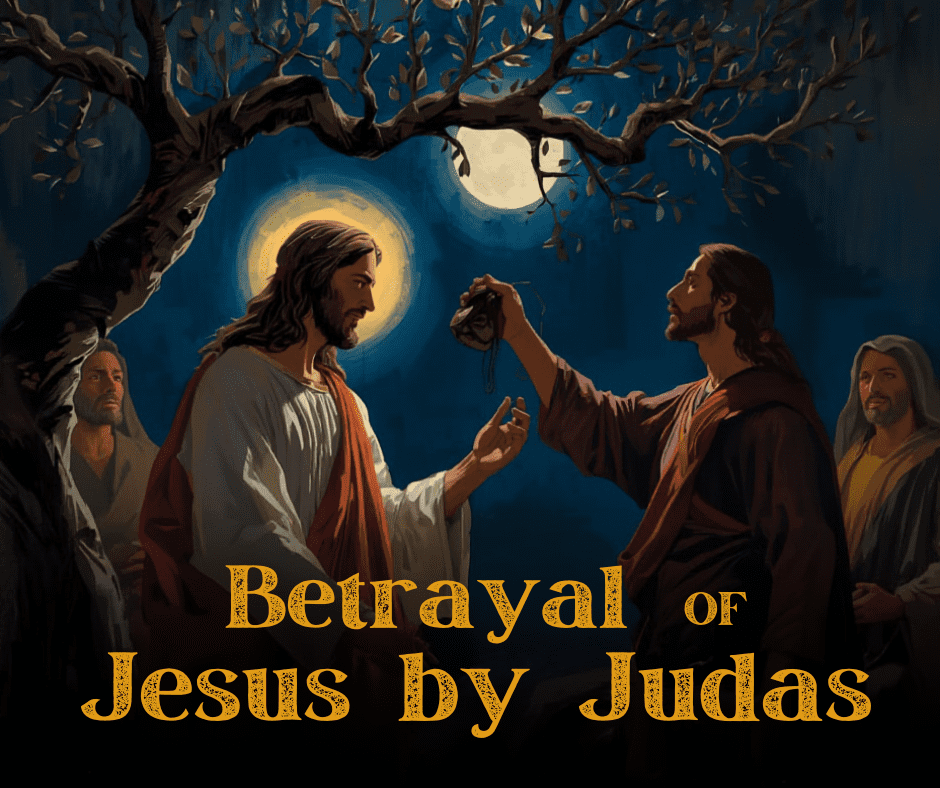
The betrayal of Jesus by Judas for 30 pieces of silver.

The Betrayal of Jesus — What It Means for Christians Today

Matthew 26:14–16, 47–56 describes the betrayal of Jesus.

The betrayal of Jesus Christ is one of the most painful scenes in all of Scripture. It is not painful merely because of the injustice, but because of the intimacy. Jesus was not betrayed by a stranger, an enemy army, or a distant critic. He was betrayed by a man who had walked beside Him for three years—a man who heard His teaching, saw His miracles, and shared His meals. The story forces us to examine not only Judas, but our own hearts as we reflect on the betrayal of Jesus.

Before we look at the details, we must remember a vital truth: Jesus was not a helpless victim. He willingly gave Himself. The betrayal did not surprise Him, nor did it overpower Him. It fulfilled the Scriptures and revealed the depth of His love.

Who Was Judas Iscariot?

Judas was not an outsider. He was one of the twelve disciples personally chosen by Jesus. He had the same opportunities as Peter, John, and the others. Yet Scripture reveals that proximity to Christ does not guarantee loyalty to Christ. The betrayal of Jesus by Judas was shocking because Judas had every possible opportunity for devotion.

Jesus referred to Judas in sobering terms. In John 6:70–71, He called him “a devil,” indicating the spiritual darkness that had taken root in his heart. In John 17:12, Jesus called him “the son of perdition,” a phrase describing one headed toward destruction. Judas reminds us that outward association with religion can hide inward rebellion. A person may stand near holy things and still resist the Holy One.

Why Did Judas Betray Jesus?

The betrayal began not with soldiers, but with a question. Judas went to the chief priests and asked, “What will you give me to betray Him?” His loyalty had a price. He did not stumble into sin by accident; he negotiated it. He promised, “I will deliver Him to you,” turning friendship into a transaction.

This moment exposes the danger of a divided heart. When devotion to Christ competes with love for gain, recognition, or advantage, compromise soon follows. Judas teaches us that betrayal begins long before the public act; it begins with private willingness.

What Do Thirty Pieces of Silver Mean?

The chief priests agreed to pay Judas thirty pieces of silver—the price of a common slave according to Exodus 21:32. The Son of God was valued at the cost of damaged property. Yet even this humiliation fulfilled prophecy, as Zechariah 11:12 foretold the same amount centuries earlier. Clearly, the betrayal of Jesus was significant long before the moment in the garden.

From that moment, Judas searched for an opportunity to deliver Jesus quietly. Sin often waits for convenience. It looks for the moment when resistance is weakest and accountability is absent. The tragedy is not only the price Judas accepted, but the value he placed on Christ.

The Arrest of Jesus

When the moment came, a mixed crowd arrived in the garden. The traitor led Roman soldiers and officers from the high priest—religious authority joined with political power. They carried swords and clubs, prepared for resistance, though Jesus had shown none.

They even brought a warrant from the Sanhedrin, the Jewish Supreme Court. Everything looked official, legal, and orderly. Yet legality does not equal righteousness. History repeatedly shows that injustice can wear the clothing of authority.

The Plan and the Deceit

Judas provided a sign: a kiss. In that culture, a kiss was a gesture of affection and respect. He twisted a symbol of love into an instrument of betrayal. He greeted Jesus with, “Hail, Master!” and then kissed Him—the most painful hypocrisy imaginable.

This is the nature of deceit. It often disguises itself with polite words and friendly gestures. The danger is not only open hostility, but false loyalty that conceals selfish motives. Incidentally, Christians today still reflect on the betrayal of Jesus as a warning against such hypocrisy.

The Master’s Response

Jesus answered Judas with a single word: “Friend.” Even in betrayal, Christ spoke with calm dignity. He asked, in essence, “Why have you come?” His response reveals both sorrow and sovereignty. He wasn’t panicked nor vengeful; He remained in control.

At that moment, Peter reacted differently. According to John 18:10, he drew one of the two swords the disciples possessed and struck the servant of the high priest, cutting off his ear. Peter’s intention may have been courage, but his action was misguided. He exposed the other disciples to danger and misunderstood Christ’s mission.

Jesus immediately corrected him: “Put your sword back in its place.” The kingdom of God would not be advanced by violence. As later written in 2 Corinthians 10:3–4, the weapons of our warfare are spiritual, not carnal. Jesus reminded them that He could summon twelve legions of angels—tens of thousands of heavenly warriors—but He chose obedience instead. The Scriptures had to be fulfilled. Redemption required surrender, not resistance.

Why Did the Disciples Flee?

In the final scene, the disciples fled. Their fear overtook their promises. This was their sin, and it added to Christ’s suffering. He stood alone—abandoned by friends, rejected by leaders, and delivered by a traitor.

Yet in that loneliness, the purpose of God shone clearly. Christ, as the sacrifice for sins, was abandoned. Christ, as the Savior of souls, stood alone. No human ally could share the burden of redemption. Only He could drink that cup.

What Does the Betrayal of Christ Mean for Us Today?

The betrayal of Christ is not merely a historical account; it is a spiritual mirror. Judas warns us about divided loyalty. Peter warns us about impulsive zeal without understanding. The fleeing disciples warn us about fear. Jesus, however, shows us steadfast obedience, mercy toward betrayers, and unwavering commitment to God’s plan.

We may never sell Christ for silver, but we are tempted to compromise Him for convenience, approval, or comfort. The passage calls us to examine our hearts, strengthen our faith, and remain true in moments of pressure.

Above all, it reveals the love of Christ. He knew the betrayal was coming, yet He still called Judas “friend.” He knew the cross awaited Him, yet He walked forward willingly. The betrayal did not defeat Him—it displayed the depth of His grace. Ultimately, the betrayal of Jesus reveals both the darkness of human sin and the light of divine mercy.

What Is the Biblical Purpose of Fasting?

Biblical purpose of fasting
Biblical fasting is a voluntary, temporary setting aside of normal routines in order to seek God with greater focus.

What Is the Biblical Purpose of Fasting?

New Christians often wonder what is the biblical purpose of fasting. Because they are eager to honor Scripture, they want to understand whether fasting is required and what purpose it serves. At the same time, fasting can feel foreign to modern American life—and for some people with medical conditions such as diabetes, it may even be unsafe. A careful look at Scripture brings both clarity and balance to this subject.

What Fasting Is — and What It Isn’t

To understand fasting, we must place ourselves in the world of the Bible. In biblical times, gathering and preparing food demanded significant time and labor. There were no supermarkets or fast-food restaurants. Because food required so much daily attention, fasting often meant abstaining from meals and intentionally setting that time aside for spiritual pursuits such as prayer, repentance, and meditation on God’s Word.

At its heart, fasting is not merely the absence of food, but the intentional redirection of time and focus toward God for a defined period.

What Is Fasting?

Biblically, fasting most often involved food, but the principle can extend beyond meals. Fasting is voluntarily abstaining from something that occupies a large portion of one’s attention in order to devote that time to prayer and Scripture. The emphasis is not the item surrendered, but the heart turned toward God.

The apostle Paul gives a related principle in marriage, advising couples not to abstain from marital relations except by mutual agreement and only for a limited time devoted to prayer (1 Corinthians 7:3–5). The pattern is intentional, temporary, and spiritually focused.

What Fasting Is Not

Fasting is not a badge of spiritual superiority. Abstinence without prayer, humility, and meditation on Scripture is simply dieting or self-denial—not biblical fasting. True fasting is relational; it is time set apart to seek God, not to impress others or earn merit.

Biblical Reasons for Fasting

In Scripture, fasting appears in several key contexts:

1. To Seek God’s Guidance

Fasting created space for extended prayer and reflection on God’s Word. By setting aside normal routines, believers could focus more fully on seeking the Lord’s wisdom and direction.

2. To Devote Oneself Fully to God’s Work

Fasting sometimes accompanied moments of concentrated ministry. A helpful illustration appears in John 4. Jesus, weary and hungry, sent His disciples for food while He rested at a well. During that time He ministered to a Samaritan woman. When the disciples returned and urged Him to eat, He replied, “My food is to do the will of Him who sent Me” (John 4:34). The work of God took priority over physical nourishment.

3. To Prepare for Spiritual Conflict

Fasting also served as spiritual preparation. Before entering difficult spiritual seasons, believers humbled themselves, confessed sin, and immersed themselves in prayer and Scripture, expressing dependence on God rather than self-strength.

Is Fasting for the Forgiveness of Sins?

No. Scripture never presents fasting as a means of earning forgiveness. The only fast explicitly commanded by God was connected to Yom Kippur, the Day of Atonement (Leviticus 16:29; 23:27), and that command was given specifically to Israel under the Mosaic Law.

Israel awaited atonement with solemn expectation. The church, however, lives in the reality of redemption already accomplished in Christ. Christians do not fast to obtain forgiveness, but to deepen dependence on God and align their hearts with His will.

Is Fasting Commanded for Christians Today?

While fasting can be spiritually beneficial, the New Testament does not command it as a universal requirement. It is a voluntary discipline, not a test of faithfulness. Wisdom, health considerations, and personal conviction should guide its practice.

Summary Takeaway

The purpose of Biblical fasting is not about earning favor with God, proving spirituality, or securing forgiveness. It is a voluntary, temporary setting aside of normal routines in order to seek God with greater focus. For believers in Christ, fasting is a tool for spiritual clarity, humility, and devotion—not a requirement for salvation or a measure of holiness.

BACK TO QUESTIONS & ANSWERS

Tongues: Do Only Those Who Speak in Tongues Have the Holy Spirit?

Tongues: Is It Evidence of the Holy Spirit

Do Only Those Who Speak in Tongues Have the Holy Spirit?

Question:


Many say that those who do not speak in other tongues do not have the Holy Spirit. Do only those who have other tongues have the Holy Spirit?

Answer:

This question has caused confusion for many sincere believers. Scripture gives a clear and balanced answer when we read Paul’s teaching in context—especially 1 Corinthians chapters 12–14.

The Context of Paul’s Teaching

Paul wrote to the Corinthian church to correct serious problems: division, immorality, spiritual immaturity, and confusion in their worship services. In chapters 12–14, he focuses on the work of the Holy Spirit in the church. His purpose is not to create spiritual competition, but to show how the Spirit unifies believers rather than divides them.

  • Chapter 12 – The Holy Spirit distributes spiritual gifts among believers.
  • Chapter 13 – Spiritual gifts must operate through love.
  • Chapter 14 – Worship services should be orderly and edifying.

“Concerning Spiritual Things” (1 Corinthians 12:1–3)

In verse 1, the King James Version inserts the word “gifts.” It is italicized, indicating it is not in the original Greek text. Paul is first addressing spiritual matters and doctrines, not merely gifts.

Paul says, “I would not have you ignorant.” In his letters, he highlights three areas Christians should understand clearly:

  • God’s plan for Israel – Romans 11:25
  • Spiritual truth and doctrine – 1 Corinthians 12:1
  • The resurrection and eternal hope – 1 Thessalonians 4:13

He reminds believers that the Holy Spirit:

  • Does not promote Himself or elevate individuals.
  • Glorifies Jesus Christ and testifies of Him (John 15:26).

Diversities, but the Same Spirit (1 Corinthians 12:4–6)

Paul explains that there are:

  • Different gifts – spiritual abilities.
  • Different ministries – roles or offices in the church.
  • Different operations – ways God works through believers.

Though the expressions differ, the same Holy Spirit is the source of them all.

The Manifestation of the Spirit (1 Corinthians 12:7–11)

The word manifestation means an outward display of the Spirit’s work for the benefit of the entire church, not personal recognition. Paul lists several gifts, including wisdom, knowledge, faith, healing, miracles, prophecy, discerning of spirits, tongues, and interpretation of tongues.

The Place of Tongues

Tongues are a legitimate spiritual gift, but Scripture makes several important points:

  • Tongues have value in personal devotion, but a limited role in public worship (1 Corinthians 14:18–19, 23).
  • In church gatherings, tongues must be interpreted and exercised with order (1 Corinthians 14:27–28).
  • The ability to speak in tongues is not given to every believer (1 Corinthians 12:30).
  • Tongues are not the proof of being filled with the Holy Spirit. When treated as proof, people may feel pressure to imitate or counterfeit the experience.

The Holy Spirit distributes gifts “as He wills,” not as people demand.

One Body, Many Members (1 Corinthians 12:12–31)

Paul compares the church to the human body:

  • Believers are spiritually baptized into one body—into Christ.
  • The body has many parts, each with a different function.
  • No single gift defines the whole body.

God assigns gifts according to His wisdom and purpose, not according to human expectations. Diversity of gifts is not a weakness—it is God’s design for unity.

Conclusion

The Bible does not teach that speaking in tongues is the evidence of possessing the Holy Spirit. The presence of the Holy Spirit is seen in a believer’s faith in Christ, transformed life, love for others, and participation in the body of Christ—not in the possession of one particular gift.

Tongues are a genuine gift, but they are not universal, not required, and not the measure of spirituality. The Holy Spirit gives different gifts to different believers so that the church functions like a healthy body—many parts, one Spirit, all working together for the glory of Jesus Christ.