
Biblical Definition of the Gospel

Biblical Definition of the Gospel
What does the Gospel mean in the Bible?

Gospel: What’s It Mean?

A Simple, Biblical Definition of the Gospel

The word gospel is familiar to Christians, yet often misunderstood. Some reduce the gospel to good advice. Others treat it as a self-improvement message or a call to moral living. Still others assume the gospel is simply a synonym for Christianity.

The biblical definition of the gospel is something far more specific—and far more powerful.

What Does “Gospel” Mean?

The word gospel literally means good news. But it is not just any good news. The gospel is the good news of what God has done in Jesus Christ to save sinners.

The gospel is not a command telling us what to do.
>
The gospel is an announcement telling us what God has done.

The apostle Paul summarizes the gospel clearly:

“Christ died for our sins according to the Scriptures, He was buried, and He was raised on the third day” (1 Corinthians 15:3–4).

That message is the heart of Christianity.

The Gospel Is News, Not Advice

This distinction is crucial. Advice tells you how to improve your situation. News tells you what has already happened.

The gospel does not begin with you must change.
The gospel begins with God has acted.

Christianity is not about climbing up to God through effort or morality. It is about God coming down to us in grace. The gospel announces that salvation has been accomplished—not that it must be achieved.

Why the Biblical Definition of the Gospel Is Necessary

The gospel only makes sense when we understand humanity’s problem. Scripture teaches that all people are sinners, separated from God, and unable to save themselves. No amount of good works, religious devotion, or moral reform can remove guilt or reconcile us to God.

The gospel addresses this problem directly. Jesus lived the life we failed to live. He died the death we deserved to die. He rose again, defeating sin and death. Salvation is not earned—it is received.

The Gospel and Faith

The gospel must be believed. Faith is the means by which we receive the gospel’s benefits. It does not save because it is strong; faith saves because it trusts in a strong Savior.

Faith rests not in feelings or effort, but in the finished work of Christ. The object of saving faith is always Jesus.

The Gospel and Grace

The gospel is a message of grace from beginning to end. Salvation is offered freely, not as a reward for obedience, but as a gift to the undeserving.

Grace explains why salvation is possible.
Grace explains why salvation is secure.

The gospel leaves no room for boasting. Everything needed for salvation has been provided by God.

The Gospel and Hope

The gospel does not only address the past and present; it secures the future. Because Jesus rose from the dead, believers have a living hope. The gospel promises resurrection, eternal life, and the restoration of all things.

Christian hope is not grounded in personal success or earthly comfort. It is grounded in the risen Christ and the promises secured by His victory.

What the Gospel Produces

The gospel does not merely inform—it transforms.

The gospel produces repentance and faith.
>
The gospel produces obedience rooted in gratitude.
>
The gospel produces humility, assurance, and love.

Obedience flows from the gospel; it never replaces it. Good works are the fruit of salvation, not the cause of it.

Conclusion: The Gospel Made Simple

The gospel is not advice.
>
The gospel is not self-help.
>
The gospel is not moral reform.

The gospel is the good news that God saves sinners through Jesus Christ.

Christ has lived.
>
Christ has died.
>
Christ has risen.

And because of that, God forgives, restores, and gives sinners eternal life.

Finally, that is the gospel.
Go to the Previous Lesson Click: HOPE

Go to the Next Lesson: REPENTANCE

What Is Grace in the Bible

Grace - What's It Mean
What does grace mean in the Bible?

What Is Grace in the Bible?

A Simple, Biblical Definition of Grace

You may be wondering what grace is in the Bible—let’s look deeper.

Grace is one of the most beautiful words in the Bible—and one of the most misunderstood. Many people use the word grace to describe politeness, tolerance, or leniency. Others reduce grace to a vague kindness that excuses sin and lowers God’s standards. Scripture presents a far richer and more powerful meaning.

If we want to understand the gospel clearly, we must understand grace biblically. In thinking about what grace is in the Bible, it is essential to see its depth.

What Is Grace in the Bible?

In the simplest terms, grace is God’s unearned favor toward sinners. Grace is not something we deserve, achieve, or repay. It flows from who God is, not from who we are. If you are still wondering, “what is grace in the Bible truly about?”, consider that it reveals God’s character.

The apostle Paul summarizes grace clearly:

“For by grace you have been saved through faith—and this is not of yourselves; it is the gift of God” (Ephesians 2:8).

Grace is a gift. It cannot be earned by good works, religious effort, or moral improvement. If grace could be earned, it would no longer be grace. This gift is at the heart of understanding what grace in the Bible means for us today.

Grace and Works: What’s the Difference?

One of the Bible’s strongest contrasts is between grace and works. Works are what we do. Grace is what God gives. Exploring what grace is in the Bible helps us distinguish these two ideas.

Scripture teaches that salvation is not a reward for obedience but a rescue for the undeserving. This does not mean that obedience is unimportant; it means obedience is the result of grace, not the cause of it.

Grace does not say, “Try harder and God will accept you.”
Grace says, “God has acted—now live in response.” The message of what grace is in the Bible motivates us to respond, not to earn acceptance.

What Grace Is Not

To understand grace properly, we must also understand what it is not. It’s worth exploring what is grace in the Bible not implying.

Grace is not permission to sin. Paul addresses this misunderstanding directly: “Shall we continue in sin that grace may abound? God forbid.” Grace does not excuse sin; it forgives sin and then changes the sinner.

Grace is not moral indifference. God does not lower His holiness to save us. Instead, through grace, He transforms us so that we begin to love what He loves. Part of grasping what is grace in the Bible includes seeing its power to change us.

Grace is not weakness in God. Grace flows from God’s power, not His inability to judge. At the cross, grace and justice meet—sin is punished, and sinners are redeemed. Thus, what is grace in the Bible? It is strength and salvation joined together.

What Grace Does

Grace saves.
Grace forgives.
Grace transforms. To understand what grace is in the Bible, we must notice its ongoing effects in our lives.

Titus 2:11–12 teaches that grace not only brings salvation, but also teaches us how to live godly lives. Grace trains believers to say no to sin and yes to righteousness.

Grace gives the Christian confidence before God—not confidence in self, but confidence in Christ. Because of grace, believers approach God not as condemned criminals, but as adopted children. This assurance is rooted in what the Bible says about grace.

Grace and the Christian Life

Grace does not end at conversion. The Christian life begins by grace and continues by grace. God’s grace sustained every step of growth, obedience, and perseverance. Remember, what is grace in the Bible if not God’s continual help for believers?

When believers fail, grace calls them to repentance.
When believers grow weary, grace strengthens them.
When believers obey, grace receives the glory.

Grace humbles us because we did not earn salvation. Grace comforts us because God will not abandon what He freely gave. Ultimately, this is what is grace in the Bible: undeserved love and mercy that never fails.

Conclusion: Grace Made Simple

Grace is not earned.
Grace is not deserved.
Grace is not cheap.

Grace is God’s unmerited favor given through Jesus Christ. For anyone searching for what is grace in the Bible, this gift is at the heart of Christianity.

Grace saves sinners.
Grace changes hearts.
Grace leads to obedience.

That is grace—biblical, powerful, and life-giving. So, the next time someone asks what is grace in the Bible, you can share its true meaning.

Go to the Previous Lesson on Faith: CLICK HERE

Go to the Next Lesson of Gospel: CLICK HERE

Faith: What’s It Mean?

Faith: What’s It Mean?

Biblical Definition of Faith.
Faith is trusting God. That’s what pleases God.

Faith is key to pleasing God (Hebrews 11:6), yet it is the most misunderstood. People talk about “having faith,” “losing faith,” or “taking a leap of faith,” but the Bible uses the word in specific and meaningful ways. If we want to please God, we must first understand what faith really means according to Scripture. True faith is to trust God.

Two Uses of Faith in the Bible

1. As a Noun: “The Faith”

In Scripture, faith is sometimes used as a noun, referring to the body of truth Christians believe. Jude calls this “the faith once delivered to the saints” (Jude 1:3). In this sense, faith is not subjective or personal—it is objective truth revealed by God.

Key doctrines included in “the faith” are:

  • The virgin birth of Jesus Christ
  • The bodily resurrection of Jesus
  • The hope of heaven
  • The reality and horror of hell

These teachings define Christianity itself. To reject them is not simply to hold a different opinion, but to depart from Christianity altogether.

2. As a Verb: Trust That Acts

The Bible also uses faith as a verb—something believers actively exercise. Faith is more than believing facts about God. A person can believe something is true and yet live as though it has no effect on their life.

James reminds us that even demons believe in God—and they remain lost (James 2:19). Biblical faith is not a “blind leap of faith.” It is an informed trust based on what God has revealed in His Word.

Faith means trusting what God says, even when visible circumstances seem to contradict His promises.

What Is Faith? A Biblical Definition

Hebrews 11:1 is often quoted as the definition of faith:

“Now faith is the substance of things hoped for, the evidence of things not seen.”

At first glance, this verse can feel unclear. The key word is substance. The Greek word is hypostasis, meaning foundation or that which stands underneath.

Faith rests on a foundation—and that foundation is God Himself.

God is infinite in His being. He is all-knowing, all-powerful, and present everywhere. He is transcendent—above all creation—yet also imminent, near to His people. Faith does not rest on human confidence, positive thinking, or spoken words. The object of faith is God.

It is not a universal force that allows us to create reality out of nothing. That idea belongs to magic and New Age philosophy, not Christianity. Scripture never teaches that faith is something we use; rather, it is trusting the God who speaks.

Biblical faith is trusting God and His Word.

What Faith Does in the Life of a Christian

Faith gives assurance of what God has promised. The “things hoped for” in Hebrews 11 are not wishes—they are guarantees. Faith is like holding the title deed to eternal life.

Faith also provides conviction about realities we cannot yet see, including life after death. Because of faith, Christians live with confidence that death is not the end. For believers, death is a doorway into eternal joy with Christ.

Faith Obeys God

True faith always produces obedience. Hebrews 11 shows men and women who obeyed God when obedience seemed impossible, risky, or inconvenient.

God often calls His people to obey Him:

  • When obedience feels costly
  • When circumstances seem overwhelming
  • When trusting Him requires surrender

Faith is not proven by words alone, but by obedience rooted in trust.

Conclusion: Faith Made Simple

Faith is not a feeling.
It is not a force.

It is not blind optimism.

It is informed trust in God.

It rests on the substance of who God is.
It is revealed through obedience.
It trusts God even when circumstances say otherwise.

That is biblical faith.

To Go to the Next Lesson, CLICK HERE

Hope

What Does Hope Mean in the Bible

What Does Hope Mean in the Bible?

Why Does this matter?

Because language evolves over the years, words in the Bible may not mean what we assume it means today. It turns out, the word “hope” in the Bible carries a much bigger message.

Hope: The Meaning

In the modern world, the word usually means “a blissful want with a realization that it won’t happen.”

For example, when I say, “I hope we have an ice cream supper,” I know full well that it won’t happen.

But in the Bible, the word carries a different, bigger meaning.

The word comes from the Greek noun “elpis” and the Greek verb “elpidzo.”

The Clue

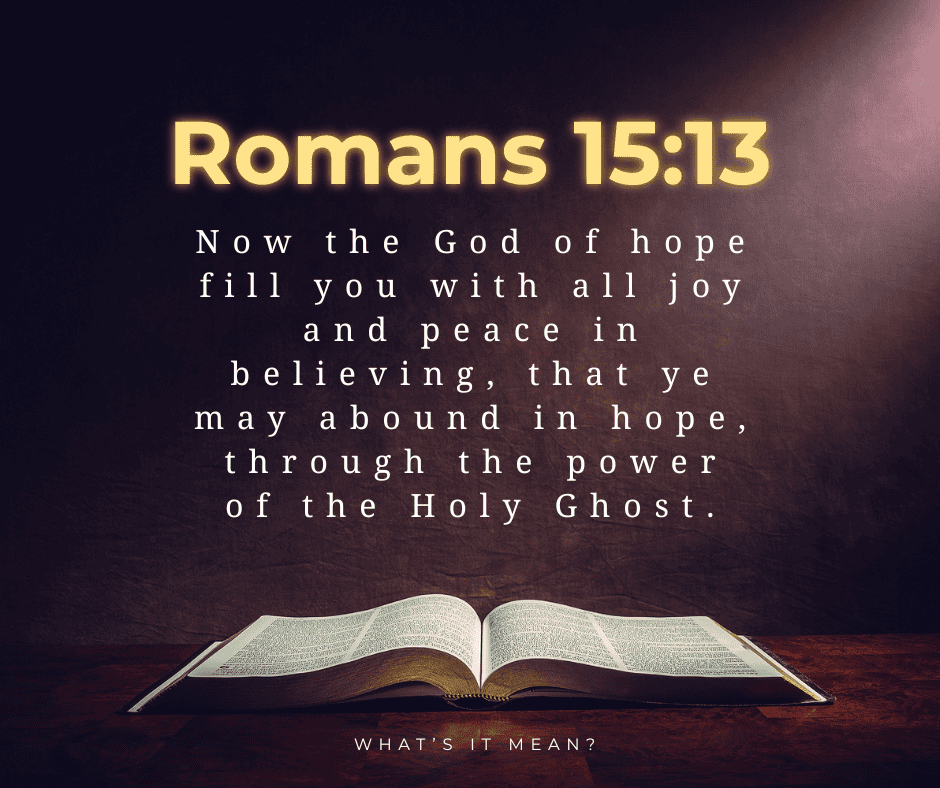
Romans 15:13 provides a clue to a richer and deeper meaning.

“Now the God of hope fill you with all joy and peace in believing, that ye may abound in hope, through the power of the Holy Ghost.”

Did you catch that? God is the author of hope.

The Bible also says that God cannot lie. So whatever God promises or says, it is a guarantee, a signed contract, an assurance.

Hebrews 6:19 says, “Which hope we have as an anchor of the soul, both sure and steadfast.”

That’s important because hope means we have a signed covenant with God, that what we hope for (heaven and eternal life) is ours because of our faith/trust in Jesus Christ.

So biblical hope is not a wistful wish. It is a guarantee, a covenant signed in the blood of Jesus, that what He promised is ours.

Conclusion

So when you see the word in Scripture, remember this meaning.

If this helped you, follow What’s It Mean for simple Bible insights where explore Scripture one Bible subject at a time.

Bethlehem: House of Bread

Bethlehem: The House of Bread

Bethlehem, a small town steeped in biblical history, carries a beautiful and profound meaning: “House of Bread.” Long before the birth of Jesus, God was already shaping a story of provision, humility, and grace.

Isn’t it fitting that Jesus—the true Bread of Heaven—was born in Bethlehem? The One who would later say, “I am the bread of life,” entered the world not in a palace or surrounded by wealth, but wrapped in cloths and laid in a manger—an animal feeding trough. From the very beginning, God made it clear that His salvation would come in humility, not splendor.

This was no accident. In the House of Bread, God offered the Bread of Heaven freely. Not reserved for kings, scholars, or the religious elite, but placed within reach of shepherds—ordinary men working the night shift. Strangers from distant lands would later come seeking Him as well. Bethlehem declared that this Bread was for everyone.

Jesus did not come to be admired from a distance. He came to be received. Bread must be eaten to give life, and Christ invites the world not merely to observe Him, but to trust Him, believe in Him, and be nourished by Him. He feeds weary souls with forgiveness, restores the broken with grace, and gives eternal life to all who come to Him by faith.

From the quiet streets of Bethlehem, God issued an open invitation that still stands today: “Come, all who are hungry.” The Bread of Heaven has been given. The table is set. The gift is free.

In Bethlehem—the House of Bread—God showed the world that His salvation is near, accessible, and offered in love. 💛