



Holiness
Holiness: What’s It Mean?

Holiness is one of the most important themes in the Bible—and one of the most misunderstood. Some hear the word holiness and think of moral superiority or religious performance. Others assume holiness is outdated or incompatible with grace.
Scripture presents holiness not as pride or legalism, but as God’s purpose for His redeemed people.
What Is Holiness in the Bible?
In the Bible, holiness means being set apart for God. At its core, it is about belonging to God and reflecting His character.
God is holy by nature. He is morally pure, completely righteous, and entirely distinct from sin. When Scripture calls God’s people to be holy, it is calling them to live in a way that reflects who He is.
We do not create holiness. It is the result of God’s work in the lives of those He saves.
Holiness Begins with God, Not Us
One of the Bible’s clearest teachings is that holiness begins with God’s initiative. God sets His people apart before they begin to live set-apart lives.
God declares believers holy in Christ before they grow in holiness in practice. This distinction is important. It is not something we achieve to belong to God; it is something we pursue because we already belong to Him.
Holiness flows from identity, not insecurity.
It Is Not Legalism
Holiness is not keeping a long list of rules. Legalism focuses on external behavior without inward transformation. Biblical holiness, however, begins in the heart.
It is not about earning God’s favor. It is about responding to God’s grace. When holiness is separated from grace, it becomes harsh and lifeless. When grace is separated from holiness, it becomes empty and misleading.
True holiness is shaped by love for God, not fear of rejection.
Obedience
Holiness expresses itself through obedience. While it describes being set apart, obedience describes how that set-apart life is lived.
Obedience is the pathway of holiness—not the foundation of it. God’s commands guide believers into lives that reflect His goodness and wisdom.
Holiness is not perfection, but progression. Believers grow in holiness over time as they are shaped by God’s Word and Spirit.
Grace
Grace does not weaken the call to holiness; it strengthens it. Grace frees believers from the power of sin so they can pursue righteousness.
Grace teaches believers to reject sin and live in a way that honors God. It is not a rejection of grace—it is the fruit of grace at work.
Where grace is truly understood, holiness follows.
Everyday Life
Holiness is not limited to religious activities. It shapes how believers think, speak, and live in everyday life.
It affects:
- Our desires and priorities
- Our relationships
- Our use of time and resources
- Our response to temptation
It is lived out in ordinary faithfulness, not extraordinary displays.
Hope
Holiness is also forward-looking. Believers pursue holiness now because they are being prepared for eternal life with a holy God. One day, holiness will be complete. Until then, believers grow by God’s grace.
It is not about becoming something new on our own—it is about becoming what God has already declared us to be in Christ.
Conclusion
Holiness is not self-righteousness.
It is not legalism.
It is not perfection.
Holiness is being set apart for God and shaped by His grace.
Holiness flows from salvation.
It grows through obedience.
It reflects the character of God.
That is biblical holiness.
To the Next Lesson:
To the Previous Lesson: Obedience
To the First Lesson: Faith
Obedience
Obedience: What’s It Mean?

Obedience is often misunderstood in Christian teaching. Some view it as the way to earn God’s favor. Others react against that idea and treat it as optional or even harmful to grace. Both views miss what Scripture actually teaches.
Biblical obedience is neither legalism nor rebellion. It is the natural response of a heart changed by grace.
What Is Obedience in the Bible?
In the Bible, obedience means willing submission to God’s will and Word. It is not mere outward conformity, but inward agreement that leads to action.
Obedience flows from trust. When we trust God, we obey Him. When obedience is separated from faith, it becomes empty rule-keeping. When faith is separated from obedience, it becomes hollow profession.
True obedience begins in the heart and expresses itself in the life.
Scripture is clear that obedience does not earn salvation. No one is justified by obedience to the law. Salvation is by grace alone, through faith alone, because of Christ alone.
Obedience is the result of salvation, not the cause of it.
This distinction protects the gospel. If obedience becomes the basis of salvation, grace is destroyed. If it is removed entirely, faith becomes meaningless.
Obedience: Love and Grace
Jesus consistently connects obedience with love. It is not driven by fear of punishment, but by love for God.
When believers obey, they are not trying to impress God. They are responding to the love they have already received. Love changes the motivation for obedience from obligation to gratitude.
Obedience says, “Because You love me, I want to walk in Your ways.”
Grace does not cancel obedience—it produces it. Grace changes the heart so that obedience becomes possible and desirable.
Where grace is truly understood, obedience follows. Grace trains believers to say no to sin and yes to righteousness. Obedience is the evidence that grace is at work.
Grace does not lower God’s standards. Grace gives believers the desire and power to live according to them.
Obedience Is Imperfect but Directional
Biblical obedience does not mean perfection. Christians still struggle with sin and weakness. Obedience is about direction, not flawlessness.
A believer’s life is marked by a growing desire to please God, even when failures occur. When Christians stumble, they return to God in repentance—not abandonment.
Obedience grows over time as believers mature in faith.
Obedience: Freedom and the Christian Life
Contrary to popular belief, obedience is not bondage. Scripture teaches that obedience to God leads to freedom. God’s commands are not oppressive; they are life-giving.
True freedom is not doing whatever we want—it is living as God designed us to live. Obedience aligns us with God’s good purposes.
Obedience touches every area of the Christian life:
- Our thoughts and desires
- Our words and actions
- Our relationships
- Our priorities
Obedience is not selective. To follow Christ is to submit every part of life to His lordship.
Conclusion
Obedience is not legalism.
It is not optional.
It is not perfection.
Obedience is loving submission to God flowing from grace.
Obedience follows faith.
It reflects love.
It honors the Lordship of Christ.
That is biblical obedience.
To the Next Lesson: Holiness
To the Previous Lesson: Jesus Is Lord
To the First Lesson: Faith
Jesus Is Lord
Jesus Is Lord: What’s It Mean?
The confession “Jesus is Lord” is one of the earliest and most important declarations in Christianity. It appears simple, yet it carries profound meaning. Many people use the word Lord casually, without realizing what they are affirming.
In Scripture, declaring that Jesus is Lord is not merely a statement of respect—it is a declaration of allegiance, authority, and worship.
What Does “Lord” Mean in the Bible?
In the Bible, Lord refers to one who possesses authority, ownership, and the right to rule. When applied to Jesus, the title means far more than “teacher” or “leader.”
The New Testament frequently uses the word Lord to identify Jesus with God Himself. To call Jesus Lord is to confess that He shares in God’s authority, glory, and rule.
This confession is not symbolic. It is theological and personal.
Jesus Is Lord Because He Is God
Scripture teaches that Jesus is not merely sent by God—He is God in the flesh. Jesus possesses divine authority, receives worship, forgives sins, and rules over creation.
Calling Him Lord means acknowledging His divine identity. It means recognizing that He has absolute authority over all things, including our lives.
Jesus is not one lord among many. He is Lord over all.
He Is Lord Because He Reigns
The lordship of Jesus is not limited to His earthly ministry. After His resurrection, Jesus was exalted and seated at the right hand of God. He reigns now with all authority in heaven and on earth.
Jesus is not waiting to become Lord—He already is.
This means history is not moving toward chaos, but toward the fulfillment of Christ’s rule. Every power, kingdom, and authority ultimately answers to Him.
Confessing Jesus as Lord
Scripture teaches that salvation involves confessing Jesus as Lord. This confession is not a magical phrase, but an expression of faith.
This means:
- Submitting to His authority
- Trusting His saving work
- Acknowledging His right to rule
Faith receives Christ as Savior and Lord—not one without the other.
Lordship and Obedience
Because He is Lord, obedience matters. Obedience does not earn salvation, but it flows from acknowledging Christ’s authority.
Calling Him Lord while refusing His commands is a contradiction. True faith produces a desire to follow Christ, even when obedience is costly.
Lordship does not mean perfection. It means direction. A heart that bows to Christ seeks to walk in His ways.
Jesus Is Lord
Over Life and Death
The lordship of Jesus extends beyond this life. Jesus has authority over life, death, judgment, and eternity. Because He is Lord, believers face death not with fear, but with hope.
Jesus holds the keys of death and life. Nothing happens outside His sovereign rule.
And the Christian Life
Acknowledging Him as Lord shapes every aspect of the Christian life:
- How we think
- How we live
- How we suffer
- How we hope
The Christian life is not self-directed. It is Christ-directed. To belong to Jesus is to live under His gracious and rightful rule.
Conclusion
Jesus is not merely a helper.
> Jesus is not merely a teacher.
> Jesus is not merely an example.
Jesus is Lord.
He is Lord by nature.
> He is Lord by victory.
> He is Lord by right.
And every knee will bow, and every tongue will confess that Jesus Christ is Lord—to the glory of God.
That is what it means to say: Jesus is Lord.
The Next Lesson: Obedience
The Previous Lesson: Justification
The First Lesson: Faith
Revelation 20
Question
In Revelation 20:1–5, we read that Satan is bound for a thousand years and then released for a short time. What is the theological purpose behind his temporary release? Does this brief freedom serve a deeper divine plan or final test within God’s redemptive narrative? Furthermore, the passage states that those seated on thrones will judge during the thousand years. Whom are they judging, especially considering that the rest of the dead are said not to come to life until after the thousand years? How should we understand the identity of both the judges and those being judged within this eschatological framework?
Answer
Revelation 20:1–5 addresses events that occur after Christ’s visible return and describes the binding of Satan, the millennial reign, and a later release. While Christians differ on the exact structure of end-time chronology, several theological themes are widely recognized.
1. The Purpose of Satan’s Temporary Release
The text states that Satan is bound so that he “should deceive the nations no more” for a thousand years, and afterward “must be loosed a little season” (Rev. 20:3). Scripture does not give a single explicit sentence explaining why he is released, but several theological purposes can be inferred:
A. The Final Exposure of Rebellion
Even after a long era of peace and righteous rule, Satan’s release reveals that rebellion is not merely environmental—it is rooted in the human heart apart from grace. His brief freedom demonstrates that evil, when given opportunity, still seeks opposition to God. This underscores the justice of God’s final judgment.
B. A Demonstration of God’s Complete Victory
God does not merely restrain evil; He ultimately defeats it openly and conclusively. The release allows evil to gather once more only to be permanently destroyed, showing that God’s victory is not fragile or temporary.
C. The Vindication of Divine Justice
The final uprising makes it unmistakably clear that God’s judgment is righteous. No one can claim that evil was suppressed unfairly or that sinners were denied opportunity. The last rebellion confirms that judgment is deserved, not arbitrary.
In short, Satan’s release does not threaten God’s sovereignty—it magnifies it. Evil is permitted one final moment only to be decisively ended.
2. The Identity of the Judges on the Thrones
Revelation 20:4 says, “I saw thrones, and they sat upon them, and judgment was given unto them.” Scripture elsewhere helps us understand who these may be:
A. Believers Reigning with Christ
Multiple New Testament passages teach that faithful believers will share in Christ’s reign:
-
“Do ye not know that the saints shall judge the world?” (1 Cor. 6:2)
-
“If we suffer, we shall also reign with Him” (2 Tim. 2:12)
-
Revelation 3:21 promises overcomers a place on Christ’s throne.
These texts strongly suggest that the judges are redeemed believers, especially those who remained faithful under persecution.
B. Martyrs Highlighted
Revelation 20:4 specifically mentions those who were beheaded for their testimony. This does not necessarily exclude other believers but emphasizes that those who suffered most visibly for Christ are publicly honored in His kingdom.
3. Whom Are They Judging?
The passage does not describe a courtroom scene with named defendants, so we interpret by broader biblical context.
A. Participation in Christ’s Government
Judging here likely includes administration, authority, and governance, not only legal sentencing. In biblical language, “judging” often means ruling or exercising leadership under God’s authority (as in the Book of Judges).
B. The Nations or the Unbelieving World
1 Corinthians 6:2–3 suggests believers will participate in judgment over the world—and even angels—indicating a role in the broader divine order rather than judging fellow believers for salvation.
C. Not the Final Great White Throne Judgment
The final judgment of the dead appears later in Revelation 20:11–15. The judging in verses 4–6 is therefore distinct from that ultimate sentencing. It is more closely tied to Christ’s millennial reign than to eternal condemnation.
4. The “Rest of the Dead”
Revelation 20:5 says, “the rest of the dead lived not again until the thousand years were finished.” This distinguishes two groups:
-
The righteous, who share in the “first resurrection” and reign with Christ.
-
The rest of the dead, who face resurrection and judgment afterward.
This separation emphasizes the blessedness of those united to Christ and the seriousness of final accountability for those who rejected Him.
Summary
-
Satan’s release serves to expose rebellion, vindicate God’s justice, and demonstrate His final victory over evil.
-
The judges are most naturally understood as redeemed believers—especially faithful martyrs—reigning with Christ.
-
Those judged are not fellow Christians for salvation, but represent participation in Christ’s righteous rule over the world, distinct from the later Great White Throne judgment.
-
The passage ultimately highlights God’s sovereignty, justice, and the honor given to those who belong to Christ.
Revelation 20 is not meant to satisfy every chronological curiosity as much as it is meant to assure believers: evil will end, Christ will reign, and faithfulness to Him is never in vain.

Jesus Walks on Water
Jesus Walks on Water
Matthew 14:22–33
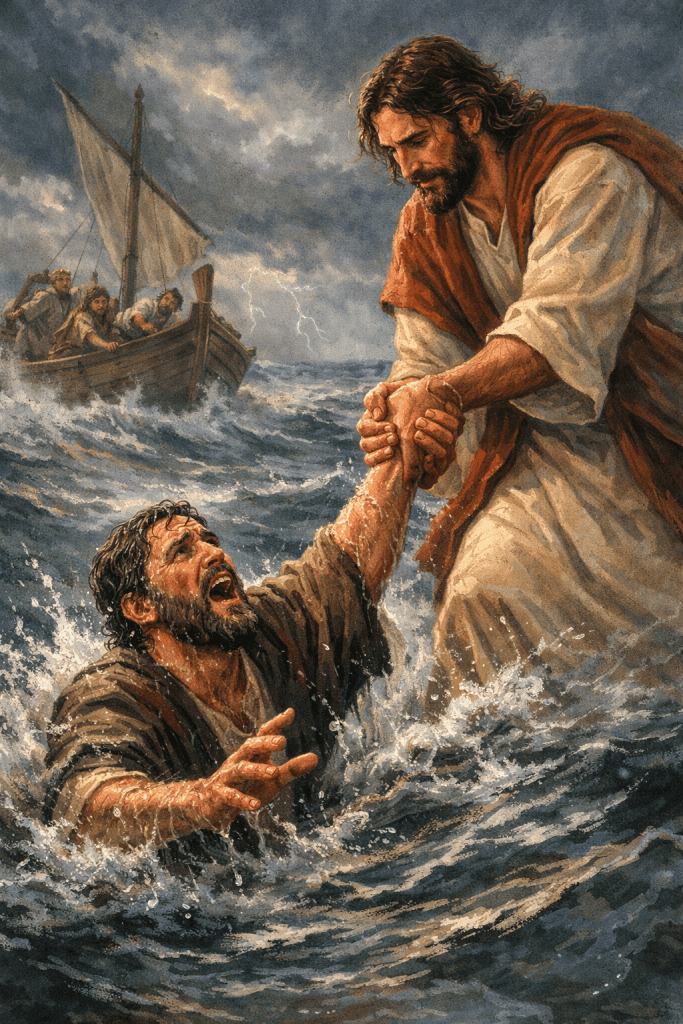
After Jesus fed five thousand, the crowd was electrified. They had witnessed supernatural provision and began to conspire to make Jesus an earthly king (John 6:15). Their enthusiasm, however, was misguided. Christ did not come to lead a political revolution but to establish a spiritual kingdom. Recognizing the danger of misplaced expectations, Jesus immediately dismissed the multitude and sent His disciples across the Sea of Galilee. He would not allow either the crowd or the disciples to be swept into a movement that misunderstood His mission.
Christ Is on the Mountain
While the disciples went to sea, Jesus went to prayer. This contrast is striking and instructive. Though surrounded by great needs and endless ministry opportunities, Christ deliberately withdrew to be alone with the Father. He chose solitude not from weakness, but from spiritual wisdom. Prayer was His renewal, His communion, His strength.
He was alone.
He was alone praying.
He was long at prayer.
The Gospel tells us He began praying in the evening and remained until the fourth watch of the night—between three and six in the morning. Jesus, the Son of God, demonstrated the necessity of secret prayer (Matthew 6:6). If He required communion with the Father, how much more do we?
When the disciples went to sea, Jesus went to prayer. Their journey would soon prove why that mattered.
The Disciples at Sea
The disciples obeyed Christ’s command and launched their boat under fair skies. Obedience did not guarantee calm waters. Midway across the sea, a violent storm arose. Darkness surrounded them, and the winds battered their vessel. The same men who had experienced Christ’s power before now found themselves in distress without His physical presence.
The last time they faced a storm, Jesus was asleep in the boat. He only needed to be awakened. This time, He was not visibly with them at all.
Yet they did not turn back. They continued rowing toward the other side because obedience does not expire when circumstances change. Troubles and difficulties may disturb us in our duty, but they must not drive us from it. Faith presses forward even when the sky grows black and the winds howl.
Jesus Walks on the Water
At the darkest hour—just before dawn—Jesus came to them, walking upon the water. What they feared most became the very path upon which Christ approached them. Yet instead of relief, terror filled their hearts. They cried out, thinking they had seen a ghost.
Then came the voice that calms every storm of the soul:
“Be of good cheer.”
“It is I.”
“Be not afraid.”
The phrase “It is I” can also be understood as “I AM,” echoing the divine name. The One walking upon the waves was not merely a teacher or prophet—He was God in the flesh.
Peter’s Boldness and Struggle
Peter responded with characteristic courage: “Lord, if it be Thou, bid me come unto Thee on the water.” Christ answered with a single word: “Come.”
Peter stepped out of the boat. For a moment, faith triumphed over fear. As long as his eyes were fixed on Jesus, he walked above the storm. But when he shifted his attention to the wind and waves, fear invaded his heart. The cause of his fear was the boisterous wind. The effect of his fear was that he began to sink.
Yet Peter did the right thing in the wrong moment—he prayed. His prayer was short but powerful: “Lord, save me!”
Christ’s Grace
Immediately, Jesus stretched forth His hand and caught him. Grace was swift. Mercy was near. Deliverance was certain. Christ saved Peter, then gently rebuked him: “O thou of little faith, wherefore didst thou doubt?” The rebuke was not rejection; it was correction. The same hand that rescues also refines.
Conclusion
When Jesus and Peter entered the boat, the storm ceased. Christ could have walked directly to shore, but He chose instead to return with His disciples. His presence brought peace. Their fear turned to worship, and their confession rang clear: “Truly Thou art the Son of God.”
This passage asks searching questions of every believer:
Are we fair-weather Christians—faithful only when skies are clear?
Do we abandon obedience when storms arise?
Do we focus on waves instead of the Savior?
While we struggle on the tempestuous sea of life, Christ is on the mountain interceding for us. And in His perfect timing, He comes—sometimes walking upon the very troubles that threaten to overwhelm us. The call remains the same: Come. The question is whether we will trust Him enough to step out in faith.
Justification
Justification: What’s It Mean?
A Simple, Biblical Definition
Justification is one of the most important words in the Bible—and one of the least understood. Many Christians use the word without being able to explain it. Others confuse it with forgiveness, transformation, or moral improvement.
Scripture gives it a clear and powerful meaning. When we understand it, the gospel becomes clearer, assurance becomes stronger, and grace becomes sweeter.
What Is Justification in the Bible?
In the Bible, justification is God’s legal declaration that a sinner is righteous in His sight. It is a courtroom term. To justify does not mean to make someone righteous inwardly; it means to declare them righteous legally.
Justification answers a crucial question:
How can a sinful person be right with a holy God?
The answer is not in human effort, but in God’s gracious verdict.
Not Moral Improvement
One of the most common misunderstandings is that justification means becoming morally better. While the Christian life involves growth and change, that is not justification.
Justification does not describe what happens inside us; it describes what God declares about us.
At the moment of justification, the believer is still imperfect. But God declares the sinner righteous because of Christ, not because of personal goodness.
By Grace Alone
Scripture repeatedly teaches that justification is a gift of grace. It cannot be earned, assisted, or maintained by works.
God justifies the ungodly—not those who have cleaned themselves up. This means justification depends entirely on God’s grace, not human obedience.
If justification were based on works, it would never bring peace or assurance. Grace alone explains how sinners can stand confidently before God.
Through Faith Alone
Justification is received through faith. Faith is not a work that earns justification; it is the means by which we receive God’s verdict.
Faith looks away from self and rests in Christ alone. The believer is justified not because faith is strong, but because Christ is sufficient.
Faith does not add to Christ’s work. It receives it.
Justification and Christ’s Righteousness
The foundation of justification is the righteousness of Jesus Christ. Jesus lived a perfectly obedient life and died as a substitute for sinners–God credits Christ’s righteousness to the believer.
This is often called imputed righteousness. Our sin is counted to Christ at the cross, and His righteousness is counted to us by faith.
It is not God pretending sinners are righteous. It is God declaring sinners righteous because Christ truly is righteous on their behalf.
Peace with God
One of the greatest results of justification is peace with God. The believer is no longer under condemnation. The legal case is settled. The verdict has been rendered.
Because justification is a completed act, it does not fluctuate with feelings or performance. The believer’s standing before God is secure.
This is why justification produces confidence, humility, and gratitude—not pride.
The Christian Life
Justification happens once and forever. It is not repeated. It is not reversed. It is not improved over time.
Growth in holiness follows justification, but it never replaces it. Obedience flows from being justified; it does not lead to justification.
Understanding this protects the gospel from distortion and guards believers from both pride and despair.
Conclusion: Justification Made Simple
Justification is not self-improvement.
It is not earned.
It is not temporary.
Justification is God declaring sinners righteous through faith in Jesus Christ.
Justification is by grace.
It is through faith.
It is based on Christ alone.
That is biblical justification.
Go to the Next Lesson: Jesus Is Lord
Go to the Lesson: Salvation
Go to the First Lesson: Faith
Transfiguration: Glory of Christ Revealed
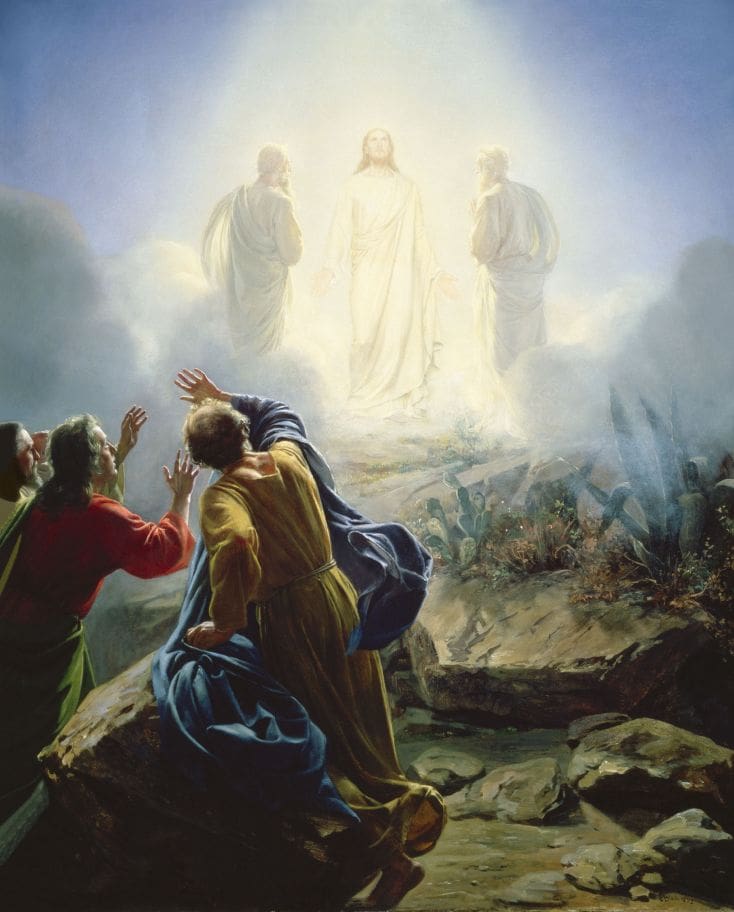
This work is in the public domain in its country of origin and other countries and areas where the copyright term is the author’s life plus 100 years or fewer. This work has been identified as being free of known restrictions under copyright law, including all related and neighboring rights.
Transfiguration: The Glory of Christ Revealed
Matthew 17:1–9
The Transfiguration of Jesus is one of the most majestic and revealing moments in the earthly ministry of Christ. For a brief moment, the veil of His humanity was drawn back, and His divine glory shone openly before chosen witnesses. This event was not merely spectacular—it was deeply theological, affirming who Jesus is and why His words must be heard above all others.
The Circumstances of the Transfiguration (Matthew 17:1)
The Time
Matthew records that the Transfiguration occurred six days after Jesus revealed to His disciples that He would soon suffer and die (Matthew 16:21). Luke’s Gospel mentions about eight days. The two accounts harmonize easily:
- The day Jesus revealed His death
- Six full days between
- The day of the Transfiguration
1 + 6 + 1 = 8 days
Rather than contradicting each other, the Gospel writers are measuring from slightly different reference points, much like we sometimes do today.
The Place — A Mountain
Scripture simply says “a high mountain,” though many identify it with Mount Miron. The exact location is less important than its symbolism:
- A solitary place — away from the crowds and distractions
- A sublime place — lifted above the world below
Mountains in Scripture often serve as meeting places between God and man. Elevation here reflects revelation.
The Witnesses — Peter, James, and John
Jesus chose three disciples to witness this moment. Their presence was not random.
- Jewish law established that truth is confirmed “in the mouth of two or three witnesses.”
- These three formed Christ’s inner circle.
They were present at:
- The raising of Jairus’ daughter (Mark 5:37)
- The Transfiguration
- The agony in the Garden of Gethsemane (Matthew 26)
They saw Christ’s power, glory, and suffering—a full spectrum of His mission.
The Manner of the Transfiguration (Matthew 17:2)
Matthew writes that “His face did shine as the sun.” Christ did not become something He was not; rather, He revealed what He always was. The servant’s veil was lifted, and the form of God shone through (Philippians 2:6).
Scripture repeatedly associates God with light:
- “God is light” (1 John 1:5)
- He “dwells in the light” (1 Timothy 6:16)
- He “covers Himself with light as with a garment” (Psalm 104:2)
Even His clothing became radiant. Matthew Henry observed that Moses’ reflected glory could be hidden behind a veil, but Christ’s glory emanated from within, illuminating even His garments. Moses reflected glory; Jesus possessed it.
The Companions of the Transfiguration (Matthew 17:3)
Two figures appeared beside Christ: Moses and Elijah.
Why Moses and Elijah?
They represent the Law and the Prophets, the entire Old Testament witness pointing to Christ. Their lives share remarkable parallels with Jesus:
- Both fasted forty days and nights.
- Both performed miracles.
- Both departed earthly life under mysterious circumstances.
Moses died but his burial place was never found, and Scripture even records a spiritual dispute over his body (Jude). Elijah was taken into heaven in a chariot of fire without tasting death.
Luke tells us they spoke with Jesus about His coming “decease”—literally, His exodus. Just as Moses led Israel out of bondage, Christ would soon lead humanity out of the bondage of sin through His death and resurrection.
Peter’s Confusion (Matthew 17:4)
Peter, overwhelmed, exclaimed, “Lord, it is good for us to be here,” and suggested building three tabernacles—one for each figure. His intention was sincere, but his understanding was flawed. By proposing equal honor, he unintentionally placed Jesus on the same level as Moses and Elijah. The moment required correction, and heaven responded immediately.
The Bright Cloud and the Voice (Matthew 17:5)
A bright cloud overshadowed them, and a voice declared:
“This is My beloved Son… Hear Him!”
Under the Old Covenant, God often appeared in thick darkness—at Sinai, in the temple, in scenes of awe and trembling. Here, under grace, the cloud is bright. The symbolism is profound:
- The Old Testament emphasized law, fear, and distance.
- The New Testament reveals light, love, and nearness.
The command “Hear Him” shifts authority unmistakably to Christ. The Law and the Prophets prepared the way; the Son is the final Word.
The Fright of the Disciples (Matthew 17:6–8)
The disciples fell on their faces in terror at the voice of God. Yet the same Jesus who shone with divine brilliance now approached them with tender compassion.
- What He did: He touched them.
- What He said: “Arise, and be not afraid.”
When they lifted their eyes, they saw only Jesus. Moses and Elijah left. The message was clear: prophets serve their time, but Christ remains forever. He is “the same yesterday, today, and forever” (Hebrews 13).
Conclusion
The Transfiguration proclaims several enduring truths:
- Jesus is God in human form. His glory is intrinsic, not borrowed.
- The saints live beyond death.
- Moses and Elijah were recognized by name, reminding us that identity continues in heaven.
- Two paths to glory are pictured:
- Moses represents believers who enter heaven through death.
- Elijah represents believers translated at Christ’s return.
- Above all, we must hear Jesus. His voice carries final authority.
The mountain scene fades, the cloud lifts, and the disciples descend—but they descend changed. They have seen the King in His beauty. The Transfiguration is not merely a spectacle of light; it is a revelation of supremacy. Christ is not one voice among many. He is the Beloved Son. And heaven’s command still stands:
“Hear Him!”
Gethsemane: Garden of Crushing
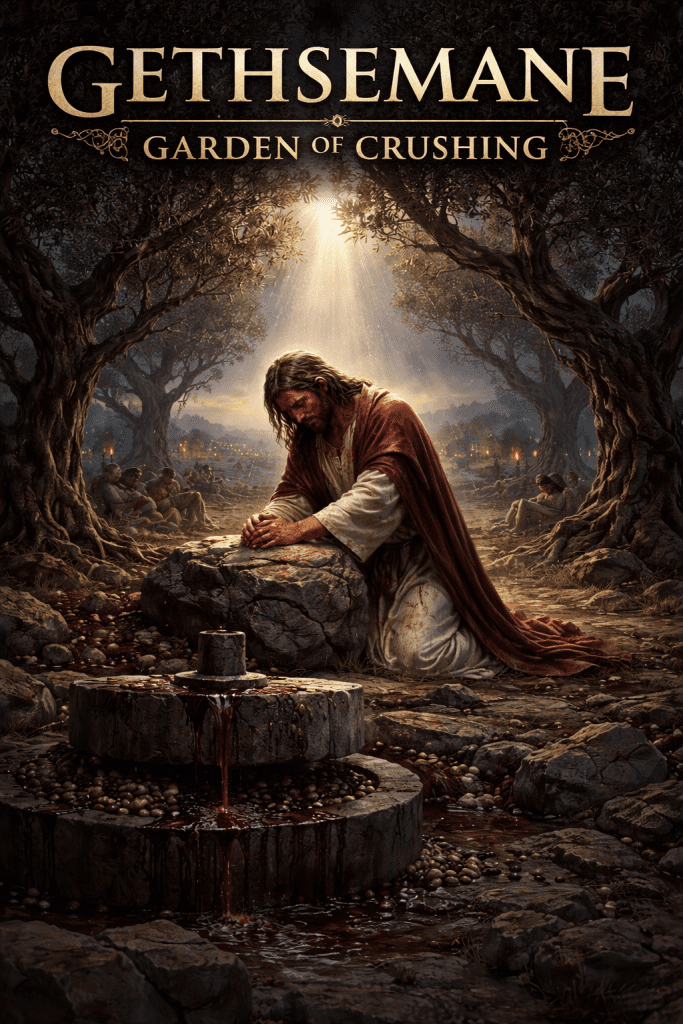
The Garden of Crushing
Matthew 26:36–46
In the closing hours before His arrest, Jesus entered a quiet olive grove outside Jerusalem known as Gethsemane. What appeared to be a secluded place of prayer was, in reality, the scene of profound spiritual conflict. Here, beneath the shadow of ancient trees, the Son of God bore the crushing weight of humanity’s sin. Jesus prayed in the Garden of Gethsemane because He felt the full burden of what lay ahead—the suffering, the separation, and the sacrifice required to redeem the world.
The Place
Verse 36 tells us that Jesus came with His disciples “unto a place called Gethsemane.” The name Gethsemane means “olive press.” In ancient times, olives were crushed under heavy stones until precious oil flowed out. The symbolism is striking. In this garden, the Lord Jesus would be spiritually pressed and bruised so that the oil of salvation might flow freely to all who believe.
Scripture repeatedly notes significant events occurring in “a place called…” as if God is marking the path of redemption with divine signposts:
- Jesus was betrayed in a place called Gethsemane (Matthew 26:36).
- He was condemned in a place called Gabbatha (John 19:13).
- He was crucified in a place called Golgotha (John 19:17).
- He was buried in a garden (John 19:41).
- Now, He has gone to prepare a place for His people in heaven (John 14:3).
From the olive press to the eternal dwelling, the journey of Christ reveals God’s deliberate plan to rescue sinners and prepare a home for the redeemed.
The Company — Verses 36–37
Jesus did not enter the garden alone. Eleven disciples accompanied Him, though Judas had already departed to betray Him. At the entrance, Jesus left most of the disciples and took Peter, James, and John farther into the garden. These three had witnessed His glory on the Mount of Transfiguration; now they would glimpse His sorrow in Gethsemane.
He instructed them, “Tarry here, and watch with Me.” Yet even with close friends nearby, Jesus walked farther still to pray alone. There are moments in life—and certainly in redemption—where no human companion can fully share the burden. The Savior faced the deepest anguish of His mission in solitude.
The Agony — Verse 38
Matthew records that Jesus began to be “sorrowful and very heavy,” declaring, “My soul is exceeding sorrowful, even unto death.” Luke adds that His sweat became like great drops of blood falling to the ground (Luke 22:44). This was not mere fear of physical pain. Many martyrs have faced death with calm resolve. Christ’s agony reached deeper.
In Gethsemane, Jesus confronted the spiritual horror of bearing the sins of the world. He foresaw:
- The treachery of Judas.
- The denials of Peter.
- The malice of religious leaders.
- The cruelty of Roman execution.
More than these, He anticipated the moment when He would carry humanity’s iniquity and experience the righteous judgment of God against sin. Jesus engaged the powers of darkness (Luke 22:53), standing at the threshold of the cross where divine justice and divine mercy would meet.
Jesus returned to His disciples and found them asleep. He had asked them to watch; instead, they slumbered. His soul was in agony, even unto death, yet their eyes were heavy. The contrast is sobering—Christ alert and burdened, His followers unaware and weary.
The Petition — Verse 39
Jesus then withdrew again to pray. The gospel writer describes His posture: “He fell on His face.” This is the posture of total surrender and deep humility. His prayer reveals both His humanity and His obedience:
- His title for God: “O My Father!”
- His request: “If it be possible, let this cup pass from Me.”
- His submission: “Nevertheless, not as I will, but as Thou wilt.”
The “cup” symbolized the full measure of suffering and divine wrath against sin. Jesus did not rebel against the Father’s will; rather, He expressed the genuine anguish of His human nature while perfectly submitting to the divine plan. He prayed this prayer three times. The first time He asked if the cup might pass. By the second and third prayers, His words reflected full acceptance. The struggle moved from anguish to resolve. The pressing produced obedience; the crushing released redemption.
The Rebuke — Verses 40–41
Returning again, Jesus found the disciples asleep. Their failure was simple yet serious: they slept when they should have prayed. Yet Christ’s response was correction and compassion.
He rebuked them gently: “Could ye not watch with Me one hour?”
He counseled them wisely: “Watch and pray, that ye enter not into temptation.”
He excused them kindly: “The spirit indeed is willing, but the flesh is weak.”
Though disappointed, He did not cast them aside. He understood human frailty. Even in His deepest sorrow, He extended grace. The lesson is timeless—spiritual vigilance requires prayer, for good intentions alone cannot overcome weak flesh.
The Trial Begins — Verses 45–46
Finally, Jesus declared, “The hour is at hand… Rise, let us be going.” The time for prayer had prepared Him for the time of suffering. The disciples, who slept instead of praying, would soon scatter in fear. Christ, who prayed instead of sleeping, stood ready to face betrayal, arrest, and crucifixion.
The garden reveals a powerful truth: Christ was prepared because He prayed. The disciples were unprepared because they slept. Prayer did not remove the cross, but it strengthened the Savior to endure it. In Gethsemane, the Son of God accepted the crushing load of sin so that sinners might receive the oil of salvation. The olive press of sorrow became the birthplace of hope.
What took place in that quiet garden echoes through eternity. There, Jesus chose obedience over escape, submission over resistance, and love over self-preservation. Because He endured the crushing, all who trust Him may experience forgiveness, peace, and the promise of a prepared place with Him forever.