


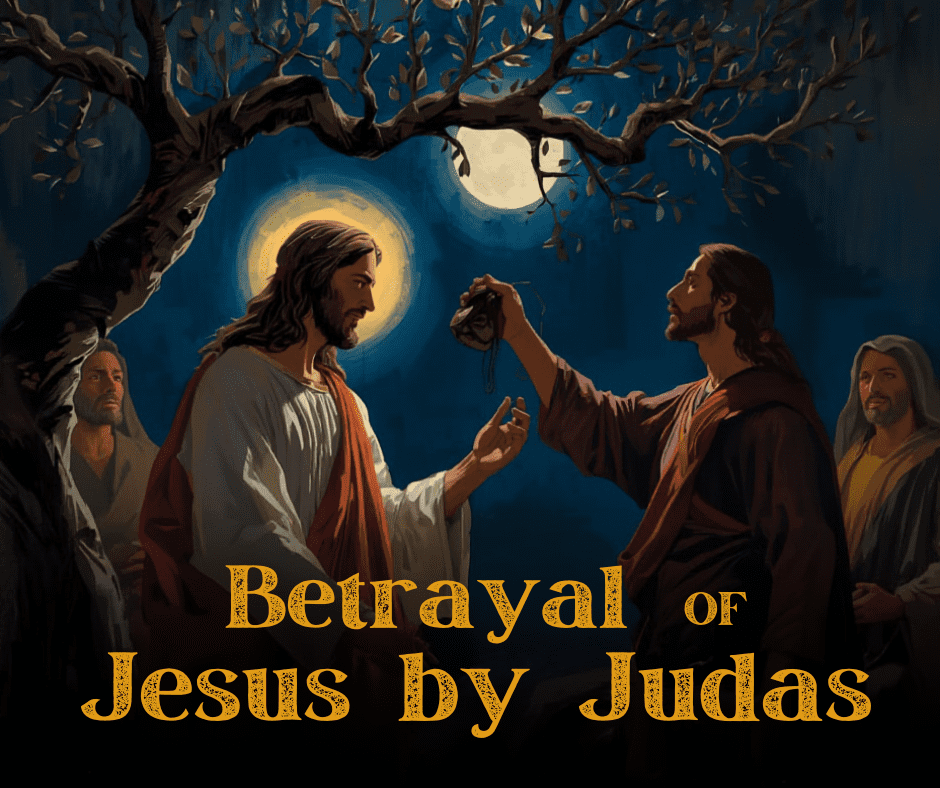
The Betrayal of Jesus — What It Means for Christians Today
Matthew 26:14–16, 47–56 describes the betrayal of Jesus.
The betrayal of Jesus Christ is one of the most painful scenes in all of Scripture. It is not painful merely because of the injustice, but because of the intimacy. Jesus was not betrayed by a stranger, an enemy army, or a distant critic. He was betrayed by a man who had walked beside Him for three years—a man who heard His teaching, saw His miracles, and shared His meals. The story forces us to examine not only Judas, but our own hearts as we reflect on the betrayal of Jesus.
Before we look at the details, we must remember a vital truth: Jesus was not a helpless victim. He willingly gave Himself. The betrayal did not surprise Him, nor did it overpower Him. It fulfilled the Scriptures and revealed the depth of His love.
Who Was Judas Iscariot?
Judas was not an outsider. He was one of the twelve disciples personally chosen by Jesus. He had the same opportunities as Peter, John, and the others. Yet Scripture reveals that proximity to Christ does not guarantee loyalty to Christ. The betrayal of Jesus by Judas was shocking because Judas had every possible opportunity for devotion.
Jesus referred to Judas in sobering terms. In John 6:70–71, He called him “a devil,” indicating the spiritual darkness that had taken root in his heart. In John 17:12, Jesus called him “the son of perdition,” a phrase describing one headed toward destruction. Judas reminds us that outward association with religion can hide inward rebellion. A person may stand near holy things and still resist the Holy One.
Why Did Judas Betray Jesus?
The betrayal began not with soldiers, but with a question. Judas went to the chief priests and asked, “What will you give me to betray Him?” His loyalty had a price. He did not stumble into sin by accident; he negotiated it. He promised, “I will deliver Him to you,” turning friendship into a transaction.
This moment exposes the danger of a divided heart. When devotion to Christ competes with love for gain, recognition, or advantage, compromise soon follows. Judas teaches us that betrayal begins long before the public act; it begins with private willingness.
What Do Thirty Pieces of Silver Mean?
The chief priests agreed to pay Judas thirty pieces of silver—the price of a common slave according to Exodus 21:32. The Son of God was valued at the cost of damaged property. Yet even this humiliation fulfilled prophecy, as Zechariah 11:12 foretold the same amount centuries earlier. Clearly, the betrayal of Jesus was significant long before the moment in the garden.
From that moment, Judas searched for an opportunity to deliver Jesus quietly. Sin often waits for convenience. It looks for the moment when resistance is weakest and accountability is absent. The tragedy is not only the price Judas accepted, but the value he placed on Christ.
The Arrest of Jesus
When the moment came, a mixed crowd arrived in the garden. The traitor led Roman soldiers and officers from the high priest—religious authority joined with political power. They carried swords and clubs, prepared for resistance, though Jesus had shown none.
They even brought a warrant from the Sanhedrin, the Jewish Supreme Court. Everything looked official, legal, and orderly. Yet legality does not equal righteousness. History repeatedly shows that injustice can wear the clothing of authority.
The Plan and the Deceit
Judas provided a sign: a kiss. In that culture, a kiss was a gesture of affection and respect. He twisted a symbol of love into an instrument of betrayal. He greeted Jesus with, “Hail, Master!” and then kissed Him—the most painful hypocrisy imaginable.
This is the nature of deceit. It often disguises itself with polite words and friendly gestures. The danger is not only open hostility, but false loyalty that conceals selfish motives. Incidentally, Christians today still reflect on the betrayal of Jesus as a warning against such hypocrisy.
The Master’s Response
Jesus answered Judas with a single word: “Friend.” Even in betrayal, Christ spoke with calm dignity. He asked, in essence, “Why have you come?” His response reveals both sorrow and sovereignty. He wasn’t panicked nor vengeful; He remained in control.
At that moment, Peter reacted differently. According to John 18:10, he drew one of the two swords the disciples possessed and struck the servant of the high priest, cutting off his ear. Peter’s intention may have been courage, but his action was misguided. He exposed the other disciples to danger and misunderstood Christ’s mission.
Jesus immediately corrected him: “Put your sword back in its place.” The kingdom of God would not be advanced by violence. As later written in 2 Corinthians 10:3–4, the weapons of our warfare are spiritual, not carnal. Jesus reminded them that He could summon twelve legions of angels—tens of thousands of heavenly warriors—but He chose obedience instead. The Scriptures had to be fulfilled. Redemption required surrender, not resistance.
Why Did the Disciples Flee?
In the final scene, the disciples fled. Their fear overtook their promises. This was their sin, and it added to Christ’s suffering. He stood alone—abandoned by friends, rejected by leaders, and delivered by a traitor.
Yet in that loneliness, the purpose of God shone clearly. Christ, as the sacrifice for sins, was abandoned. Christ, as the Savior of souls, stood alone. No human ally could share the burden of redemption. Only He could drink that cup.
What Does the Betrayal of Christ Mean for Us Today?
The betrayal of Christ is not merely a historical account; it is a spiritual mirror. Judas warns us about divided loyalty. Peter warns us about impulsive zeal without understanding. The fleeing disciples warn us about fear. Jesus, however, shows us steadfast obedience, mercy toward betrayers, and unwavering commitment to God’s plan.
We may never sell Christ for silver, but we are tempted to compromise Him for convenience, approval, or comfort. The passage calls us to examine our hearts, strengthen our faith, and remain true in moments of pressure.
Above all, it reveals the love of Christ. He knew the betrayal was coming, yet He still called Judas “friend.” He knew the cross awaited Him, yet He walked forward willingly. The betrayal did not defeat Him—it displayed the depth of His grace. Ultimately, the betrayal of Jesus reveals both the darkness of human sin and the light of divine mercy.